
A new study has found that surgery for shoulder instability in collegiate athletes is often the best option as far as returning to play, especially in those who performed at high levels previously.
Surgery for Shoulder Instability Best for Collegiate Athletes
2 min read Premium comments
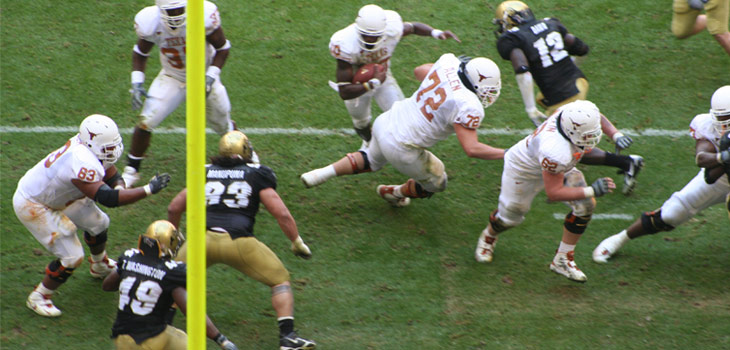
Secondary
“There was no significant statistical difference in return-to-play rates between the various types of shoulder instability surgery. However, athletes who played more games prior to injury and then had surgery were more likely to return, ” said R. J. Robins, M.D., lead author, from the US Air Force Academy Sports Medicine Service, in the July 8, 2016 news release.
According to the news release, “Overall, 85.4% of players who had arthroscopic surgery without concomitant procedures returned, while 82.4% of players who underwent anterior labral repair, 92.9% posterior labral repair and 84.8% who underwent combined anterior-posterior repair returned to play. Percentage of games played prior to injury was 49.9% and rose to 71.5% following surgery. Ninety-eight percent of athletes who were starters prior to injury were able to return as starters following surgery.”
“Having a scholarship also seemed to significantly correlate to individuals returning following surgery, ” said Dr. Robins. “Our findings suggest that the majority of players who have some form of shoulder instability repair are able to return and progress as players in their respective football programs.”
Dr. Robins told OTW, “We were surprised to note the difference in return to play rates between athletes who were utilized by their respective football programs versus players that rarely played. While the overall return to play rate for athletes that underwent arthroscopic stabilization in our study was 85%, approximately 94% of starters and utilized players were able to return to play at the same or higher level, while only 76% of athletes that rarely played were able to return to play following surgery.
“As authors, what we would like orthopedic surgeons and sports medicine physicians to take away from our study is twofold: our results suggest arthroscopic stabilization surgery for football athletes playing in the highest competitive levels of division I collegiate football over the last 10 years has largely been successful in helping these athletes return to their sport, with most playing at the same or higher participation rates and quality of play as prior to surgery. Second, the use of ‘return to play’ as a successful outcome for surgery can be confounded by factors beyond the type of injury and surgery performed for the athlete. In our particular study, athlete utilization prior to surgery and scholarship status significantly correlated with an athlete being able to return to play.”
React:
Discussion
This is a fascinating development. In my practice we've seen similar outcomes with the revised protocol. The key differentiator seems to be patient selection criteria. Has anyone else noticed the correlation with BMI thresholds?
Great point. I'd push back slightly on the conclusion, the sample size in the cited study is too small to draw population-level inferences. That said, the directional signal is compelling and worth a larger RCT.
We implemented a similar approach last year. Early results are promising but we're still gathering 12-month follow-up data. Happy to share our protocol if anyone is interested.
Join the conversation
Orthopedic professionals are discussing this. Sign in and upgrade to read every comment and add your voice.