
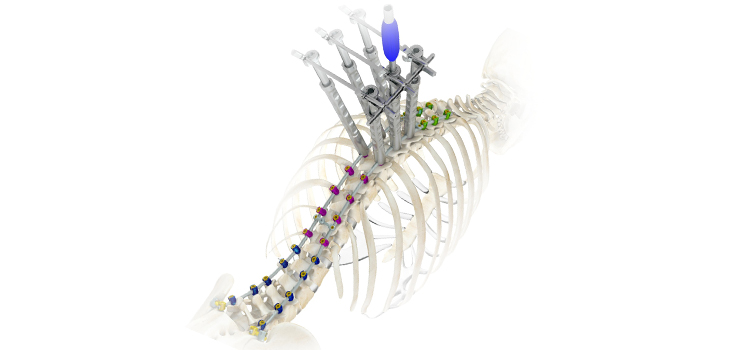
SpineCraft, LLC has received clearance from the China Food and Drug Administration (CFDA) to market its APEX Spine System in that country. According to the July 5, 2016 news release, “The APEX Spine System is designed for complex deformity correction as well as tumor, trauma and degenerative procedures and has proven clinical track record with over 15, 000 surgeries performed since its launch in the US and internationally. SpineCraft also received clearance from the CFDA to market its AIM MIS System, a minimally invasive posterior fixation solution addressing disorders in the thoracic and lumbar spine via a minimally invasive surgical procedure. The AIM MIS System has been in use in other markets since 2012.”
SpineCraft: Regulatory Clearance to Market APEX in China
1 min read Premium comments
Secondary
SpineCraft CEO Wagdy Asaad, M.D. stated, “This CFDA clearance is a significant milestone achievement for SpineCraft is an important step in expanding the global distribution of our spine systems and further advances our strategy to establish SpineCraft as a true global spine company.”
Dr. Asaad told OTW, “The Chinese market in particular represents an important growing opportunity for SpineCraft products. The approval of APEX and AIM systems opens the door to participate in public tenders and expand our product offer proposition to include governmental and military hospitals.”
As indicated in the news release, “The China spine market has become the second most important after the USA and is projected to be worth over $1 billion by 2019. This is driven by China’s large population, rising standard of living, improving treatment options and growing ageing population; all signal significant room for growth.”
React:
Discussion
This is a fascinating development. In my practice we've seen similar outcomes with the revised protocol. The key differentiator seems to be patient selection criteria. Has anyone else noticed the correlation with BMI thresholds?
Great point. I'd push back slightly on the conclusion, the sample size in the cited study is too small to draw population-level inferences. That said, the directional signal is compelling and worth a larger RCT.
We implemented a similar approach last year. Early results are promising but we're still gathering 12-month follow-up data. Happy to share our protocol if anyone is interested.
Join the conversation
Orthopedic professionals are discussing this. Sign in and upgrade to read every comment and add your voice.