
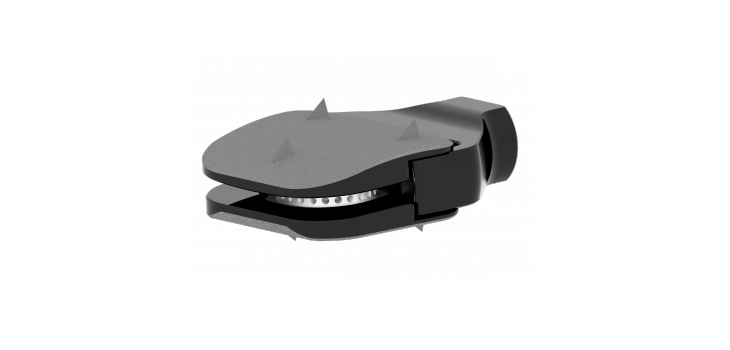
Spineart is pleased with the recently published results for the BAGUERA C cervical disc prosthesis. The work, which appeared in the Journal of Spine, emanated from a multicenter European prospective registry for the BAGUERA C cervical disc prosthesis. The paper is titled “Radiographic Outcome and Adjacent Segment Evaluation Two Years after Cervical Disc Replacement with the BAGUERA C Prosthesis as Treatment of Degenerative Cervical Disc Disease.”
Spineart: Positive Results for BAGUERA C
2 min read Premium comments
Secondary
As indicated in the July 5, 2016 news release, “A retrospective analysis of a large range of radiographic parameters was performed by an independent evaluator: 99 patients, treated for symptomatic degenerative disc diseases, by one- or two-level arthroplasty, using a total of 123 BAGUERA C prostheses were included. Radiographic images at the treated and adjacent levels, as well at the overall cervical region, were analyzed. The results, 2 years after treatment by arthroplasty using BAGUERA C, demonstrate good mobility at the treated and adjacent levels, disc height restoration and clear evidence of adjacent levels preservation. There were no signs of subsidence of the prostheses. Measures at the adjacent levels showed no signs of degeneration or kyphosis. Occurrence of heterotopic ossifications was considered low compared to data published by independent evaluators for other disc prosthesis. The publication further established cervical arthroplasty using the BAGUERA C disc prosthesis as a safe, effective and motion preserving surgical treatment. The author also considered the results encouraging in terms of adjacent level disease protection.”
Asked how mobility was measured, Jerome Tridivic, COO of Spineart, told OTW, “Mobility is primarily defined by the range of motion which was evaluated through measurements on radiographic images preoperatively, at 6 weeks follow-up and at 2 years follow-up for parameters in neutral, flexion and extension position. The measurements were performed by an independent laboratory using a semi-automated process. The process relied on preliminary manual annotations using a graphical user interface for capturing specific coordinates and an automated algorithm for angle calculation. Both the user interface and automated components were specifically developed by the laboratory for the purpose of this study.
“Radiographic evaluations for disc prosthesis are interesting as most available data on disc replacement focus mainly on outcomes such as NDI, VAS, SF-36 scores…. This radiographic evaluation of the BAGUERA C disc prosthesis allowed us to look at the benefits of cervical arthroplasty through a different perspective. A significant amount of thought and effort from the authors went into developing the methodology and automated tools required to assess the range of motion, disc angle and disc height at the operated and adjacent level. It is very satisfying to see their work being published.”
React:
Discussion
This is a fascinating development. In my practice we've seen similar outcomes with the revised protocol. The key differentiator seems to be patient selection criteria. Has anyone else noticed the correlation with BMI thresholds?
Great point. I'd push back slightly on the conclusion, the sample size in the cited study is too small to draw population-level inferences. That said, the directional signal is compelling and worth a larger RCT.
We implemented a similar approach last year. Early results are promising but we're still gathering 12-month follow-up data. Happy to share our protocol if anyone is interested.
Join the conversation
Orthopedic professionals are discussing this. Sign in and upgrade to read every comment and add your voice.