
Duke Health researchers, along with scientists from Hospital for Sick Children and Mount Sinai Hospital in Toronto, Tokyo Medical and Dental University Graduate School and Faculty of Medicine, and Seoul National University Hospital, have discovered that a type of cell surrounding blood vessels can also be the origin of sarcoma.
Sarcoma: Origin Cell Found!
1 min read Premium comments
Secondary
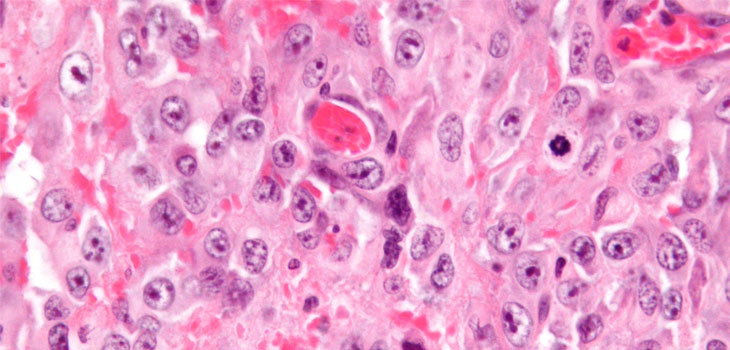
According to the July 14, 2016 news release, “…the international team of researchers describe tracing the lineage of the cancer back to the pericyte, a cell that supports the body’s blood vessels. According to the findings, genetic mutations in these cells led to osteosarcoma and soft-tissue sarcoma, as well as non-cancerous tumors.”
The senior author was Benjamin Alman, M.D., chair of the Department of Orthopedic Surgery at Duke University.
Dr. Alman told OTW, “The cells that sarcoma come from is unknown, and understanding the cell of origin in other tumor types has led to the identification of new treatments. Studies from other groups showed that cells surrounding blood vessels (pericytes) can form a variety of connective tissue cells. Based on this, we decided to determine if sarcomas could derive from pericytes.”
“It was surprising to find that both benign and malignant tumors can derive from the pericyte cells—benign desmoid tumors (which are locally invasive soft tissue tumors also called aggressive fibrzomatosis); as well as malignant sarcomas of bone and soft tissues.”
“The study found that a protein called beta-catenin was inhibited in the tumors compared to the pericytes from which they derived. Activating beta-catenin slowed sarcoma growth. Beta-catenin can be activated by lithium treatment (a drug already in use in patients), suggesting an approach that could be applied to sarcoma care.”
React:
Discussion
This is a fascinating development. In my practice we've seen similar outcomes with the revised protocol. The key differentiator seems to be patient selection criteria. Has anyone else noticed the correlation with BMI thresholds?
Great point. I'd push back slightly on the conclusion, the sample size in the cited study is too small to draw population-level inferences. That said, the directional signal is compelling and worth a larger RCT.
We implemented a similar approach last year. Early results are promising but we're still gathering 12-month follow-up data. Happy to share our protocol if anyone is interested.
Join the conversation
Orthopedic professionals are discussing this. Sign in and upgrade to read every comment and add your voice.