
Adolescent Pitching Fatigue Study Wins Top Award
Pitching Fatigue in Adolescents; 3-C’s of Bone Loss; Teaching Residents to Communicate
6 min read Premium comments
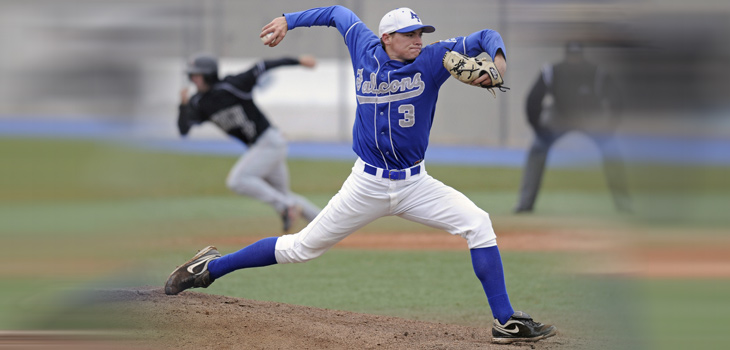
At the recent International Congress of Shoulder and Elbow Surgery meeting held in May in Jeju, Korea, there was only room for one “best paper.” This year, that honor went to Anthony Romeo, M.D. and his colleagues at Rush University for their work on pitching fatigue in adolescent players.
The paper, “The Impact of Fatigue on Baseball Pitching Mechanics in Adolescent Male Pitchers, ” analyzed 28 adolescent baseball pitchers using video detail. Dr. Romeo told OTW, “There is a general recognition that we are facing an epidemic of shoulder and elbow injuries in pitchers…one that not only involves players in Major League Baseball (MLB), but younger players as well.
“In another recent study, we used a national insurance database and found that the greatest increase in these injuries is amongst 15-19 year olds. We are now at the point where we must determine how to avoid these problems.”
“Working with our physical therapy colleagues and adolescent male pitchers, we created game simulation environments. Each pitcher warmed up, then threw 15 hard pitches, with a video analysis of the first and last pitch. Then after a break, they pitched 15 more times; we went up to 90 pitches. We stopped at 90 pitches as this reflects the recommendations for this age group, documented at the MLB pitchsmart.com website.”
“We anticipated that there would be a change in arm position early in the pitch. We found, however, that the position of the shoulder with respect to the trunk and hips was the earliest sign that the pitchers were becoming fatigued.”
“When a pitcher is throwing as hard as possible he is opening up his stance and planting his foot out front. Our expectation was that he would keep his shoulder twisted in order to maintain the kinetic energy that comes from the torso and core and moves upward in the body. But what we saw was that as these kids started to fatigue, they turned their shoulders early (opened up too early), leading to a disconnect between the trunk and shoulder rotation.”
“During this same time there was no significant change in the position of the elbow or shoulder. This suggests that the core becomes fatigued earliest, thus leading to compensation and mistakes. They open up early, and have to throw harder because they are not preserving enough kinetic energy.”
“We found that even as early as 30 pitches some young players demonstrated signs of fatigue; by 60 pitches most had some variation of fatigue. Practically speaking, this supports the concept of pitch limits and mandatory rest periods for our young throwers. It also gives us additional insight as to what we should be looking for when we are worried that our kids are getting fatigued.”
“There are only three states that have legislated high school pitch counts through their state athletic association; in other states coaches can pitch kids as much as they want, even going up to 150-170 in one game—and doing it again the next day. Either the coaches are not aware of the dangers or they are tuning out those of us who are trying to prevent these injuries.”
“When the average MLB player makes over $4 million per year, there is a lot of peer and parental pressure to push players. Parents and coaches think their kid is special and that he needs to throw a lot in order to highlight his skill set. Some parents argue that kids should throw more and some say, ‘I don’t want to say anything to the coach because he will take my son out.’
“My colleagues and I will continue to push for pitch counts around the country. The evidence is mounting for these limits, and we will do our best to protect these young players. Parents, coaches, and players need to understand that their best chance to make it to the next level of competition is to remain free of injury.”
Cobalt, Chromium, Complexity, Contribute to Bone Loss
Researchers from Germany have new evidence that when it comes to metal implants, cobalt and chromium release contributes to bone loss. Specifically, the findings indicated that metal wear particles and dissolved metals are factors in the patient’s overall level of exposure.
Anastasia Rakow, a physician and researcher at Charite’s Center for Musculoskeletal Surgery, along with her colleague, Janosch Schoon, a researcher at the Julius Wolff Institute, both commented to OTW: “From our point of view, our results are of major clinical relevance with regard to at least three cardinal issues. Firstly, our finding that the osteogenic potential of bone-marrow residing mesenchymal stromal cells (MSCs) is significantly impaired by metal-on-metal (MOM) wear degradation products adds information to the still not entirely understood pathogenesis of osteolysis and aseptic loosening seen in patients with those implants. To us, this is a link in understanding why so many MOM implants per se and secondary implants after revision of MOM containing endoprostheses fail due to aseptic loosening and lysis.”
“Secondly, the exposure assessment showed that local levels of dissociated metals exceed the systemic ones by several magnitudes. Thus, while measuring metal levels in blood or serum may be helpful for evaluating systemic effects of MOM wear degradation products, it does not allow for assessment of their effects on periprosthetic tissues.”
“Thirdly, and most importantly, our results emphasize the demand for very critical reconsideration of the use of MOM bearings and, on a related note, of taper junctions that are prone to corrosion. We conclude that the risks associated with metal-on-metal pairings clearly exceed their benefits.”
Regarding future research, they noted, “Bulk materials used in orthopedic implants are universally accepted and proved to be biocompatible. However, we know only little about their long-term in vivo stability and about the fate and distribution of in vivo generated wear and corrosion products. Thus, our future aim is to systematically analyze local samples harvested from revision surgeries to conduct an overall exposure assessment not only to cobalt and chromium but also to other relevant metals like titanium and aluminum. This can help to identify and understand biological responses in certain exposure scenarios. Thereby, we would like to help optimizing patient safety by improving the design and composition of future implants.”
HSS Communication Training Making a Difference for Residents
Doctors are like everyone else in that great communication doesn’t necessarily come naturally.
A new program at Hospital for Special Surgery (HSS), however, is making strides to improve orthopedic surgery residents’ communication skills with older adults. The program, geared toward third-year residents, aims to improve the physician-patient relationship and decrease stereotypes and misunderstandings regarding elderly patients. And it is working, says the researchers…they indeed found an improvement in residents’ attitude toward adults.
Charles Cornell, M.D. is clinical director of Orthopedic Surgery at HSS. Dr. Cornell, who started the program, told OTW, “The communication challenge is to be sure the patient is interpreting what is being said by the physician as the physician intended.”
“Physicians must use language that is plain and simple, avoiding technical words or jargon the patient may not fully understand. Also, generational and cultural differences between physician and patient may be a source of misinterpretation. Idioms and colloquialisms are perhaps the biggest potential source of confusion. Physicians must try to use clear language which is specific, avoiding words or phrases that are vague and open to different interpretation.”
“Being sure patient and physician expectations are aligned is of paramount importance. We now know that one of the greatest sources of patient dissatisfaction comes from unrealistic patient expectations not addressed before or during treatment.”
“Orthopedic surgeons want to know that they are communicating clearly and that their patients understand and will remember what was discussed. We want to know that our patients understand and therefore can follow our instructions. We want to be assured they understand the treatments we are proposing and can adopt our expectations for their outcome. Therefore, orthopedic surgeons want to know the results of research on patient expectations and they want to learn the how to adjust their communications based on patient-reported understanding.”
The study, presented at the recent Council of Orthopaedic Residency Directors, garnered interesting comments from orthopedic surgery residents: “’Conveying medical information is important, but showing my understanding of their needs helps get the information across.’ ‘I’m going to stop assuming that people understand me the first time around. I always think they will be insulted, but [now] I’ll ask if they understood everything.’”
Author
React:
Discussion
This is a fascinating development. In my practice we've seen similar outcomes with the revised protocol. The key differentiator seems to be patient selection criteria. Has anyone else noticed the correlation with BMI thresholds?
Great point. I'd push back slightly on the conclusion, the sample size in the cited study is too small to draw population-level inferences. That said, the directional signal is compelling and worth a larger RCT.
We implemented a similar approach last year. Early results are promising but we're still gathering 12-month follow-up data. Happy to share our protocol if anyone is interested.
Join the conversation
Orthopedic professionals are discussing this. Sign in and upgrade to read every comment and add your voice.