
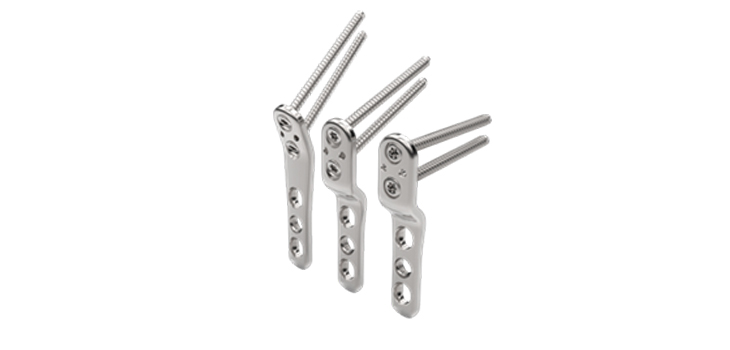
OrthoPediatrics Corporation has launched something that will hopefully mean a lot of relief for little patients. The company has released its PediLoc Infant Locking Proximal Femur (LPF) Plating System.
OrthoPediatrics Launches PediLoc Infant Locking Proximal Femur
2 min read Premium comments
Secondary
As indicated in the June 28, 2016 news release, “The OrthoPediatrics PediLoc LPF System features an expansive array of plate configurations, angles, offsets and sizes to address the needs of each individual patient. Coupled with cannulated locking screws and streamlined instrumentation, the PediLoc LPF system can accurately and reliably treat mulitiple pediatric hip pathologies. With the addition of the Infant LPF system to the existing child and adolescent offerings, all children—regardless of size—can now be treated with a PediLoc LPF plate.”
Joe Hauser, OrthoPediatrics’ Vice President of Trauma & Deformity Correction, said, “We are pleased to offer the PediLoc Infant Locking Proximal Femur System to our surgeon customers and the kids they treat. These unique, infant-sized plates build upon the Company’s comprehensive, market leading hip product portfolio. The PediLoc Infant LPF system provides pediatric orthopedic surgeons with an improved plating option for even the smallest kids. As the only company exclusively focused on pediatric orthopedics, this new product offering further demonstrates our commitment to the cause of improving the lives of children with orthopedic conditions.”
Company President and CEO Mark Throdahl told OTW, “Surgeons have not had good options until now with very young patients. Hip screws are too large and have a single point of fixation. The only available infant proximal femur plate uses screws that are too small to withstand the strong forces across the hip. So the most important aspects of the OrthoPediatrics infant locking proximal femur plate are that it is designed specifically for young children, has multiple points of fixation, and is two to three times stronger than the other available plate.”
“During the development process we were delighted by the versatility of our design. It seemed that every time we showed this product to different surgeons, new potential applications would surface. For example, we saw the plate as being used for varus de-rotations in very young patients, but we have learned it is also useful in femoral shortening procedures in young children with developmental hip dysplasia. We designed the 130 degree version of the product as a fracture plate, but it can also be used to treat congenital coxa vara patients.”
React:
Discussion
This is a fascinating development. In my practice we've seen similar outcomes with the revised protocol. The key differentiator seems to be patient selection criteria. Has anyone else noticed the correlation with BMI thresholds?
Great point. I'd push back slightly on the conclusion, the sample size in the cited study is too small to draw population-level inferences. That said, the directional signal is compelling and worth a larger RCT.
We implemented a similar approach last year. Early results are promising but we're still gathering 12-month follow-up data. Happy to share our protocol if anyone is interested.
Join the conversation
Orthopedic professionals are discussing this. Sign in and upgrade to read every comment and add your voice.