
Annunziato (Ned) Amendola, M.D., vice chair in the Department of Orthopedic Surgery at Duke University, is the new president of the American Orthopaedic Society for Sports Medicine (AOSSM).
Ned Amendola, M.D. Discusses Plans for AOSSM Presidency
2 min read Premium comments
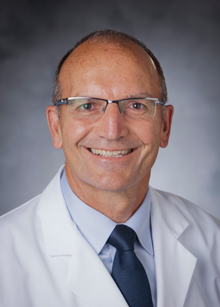
As indicated in the July 18, 2016 news release, “Prior to coming to Duke, Amendola was a Professor of Orthopedic Surgery, Director of Sports Medicine and held the Kim and John Callaghan Endowed Chair in sports medicine at the University of Iowa from 2001-2015. Amendola earned his medical degree and completed his orthopedic residency at the University of Western Ontario in London, Ontario, Canada. Prior to joining the University of Iowa in 2001, he was an Associate Professor and Chief of Orthopedic Surgery at the University of Western Ontario University Hospital. He completed fellowships at the University Hospital Western Ontario; the University of Verona, Verona, Italy, the Crystal Clinic in Akron, Ohio, and took part in the AOSSM European Sports Medicine Traveling Fellowship.
“Throughout his career, Amendola has received numerous peer-reviewed grants, and published more than 200 peer-reviewed articles. He has won several AOSSM research related awards, including the Excellence in Research Award, Cabaud Memorial Award and the O’Donohue Award. In addition, he received the Achilles Award from the International Society of Arthroscopy, Knee Surgery and Orthopaedic Sports Medicine (ISAKOS), the Samson Award from the Canadian Orthopaedic Association, the Roger Mann Award and the Leonard Goldner Award from the American Orthopaedic Foot and Ankle Society (AOFAS), and the Kappa Delta Award from the American Academy of Orthopaedic Surgeons (AAOS). He has been an invited lecturer nationally and internationally, as well as authored an extensive number of book chapters and served as editor of three textbooks on orthopedic sports medicine and arthroscopy.”
“Amendola is a Diplomate of the American Board of Orthopedic Surgery, Fellow of the Royal College of Surgeons of Canada, and Diplomate of the Canadian Academy of Sports Medicine. He is also an active member and/or board member of many orthopaedic and sports medicine organizations, including the American Board of Orthopaedic Surgery, ISAKOS, AAOS and the Arthroscopy Association of North America (AANA). He served as president of the Canadian Academy of Sport Medicine in 1997.”
Dr. Amendola told OTW, “It is important to understand the external forces and changes in health care delivery as a means of providing our members educational resources and infrastructure to learn, teach and discover ways to improve the way we care for our active patient population.”
“The AOSSM will continue to focus on the areas that have made it a global leader in sports medicine education and research through its publications, communications, fellowship, and collaboration with other organizations and sports medicine professionals nationally and worldwide.”
React:
Discussion
This is a fascinating development. In my practice we've seen similar outcomes with the revised protocol. The key differentiator seems to be patient selection criteria. Has anyone else noticed the correlation with BMI thresholds?
Great point. I'd push back slightly on the conclusion, the sample size in the cited study is too small to draw population-level inferences. That said, the directional signal is compelling and worth a larger RCT.
We implemented a similar approach last year. Early results are promising but we're still gathering 12-month follow-up data. Happy to share our protocol if anyone is interested.
Join the conversation
Orthopedic professionals are discussing this. Sign in and upgrade to read every comment and add your voice.