
The hazards to players of football and other contact sports, such as hockey, come not just from external blows to the head—partially mediated by a helmet—but from blows of less velocity that cause the brain to bounce back and forth within the skull. “Brain slosh” is what happens when the brain, which is loose in the skull, bounces around in response to a hit. A study conducted at Boston University suggests that the hundreds of minor hits experienced by players pose a greater long-term risk than do concussions.
Neck Collar Prevents Head Injuries
2 min read Premium comments
Secondary
Stephen Feller, writing for UPI, reports that players living at higher altitudes have less brain movement from a blow because of their higher cerebral blood flow, which cuts down on injuries. Researchers took a lesson from woodpeckers which have head impacts with trees 20 times greater than anything experienced by pro football players.
Woodpeckers protect their brains by wrapping their tongues around the top of their heads, which provides pressure against their vascular veins, which in turn increases blood pressure to their bird brains and prevents sloshing.
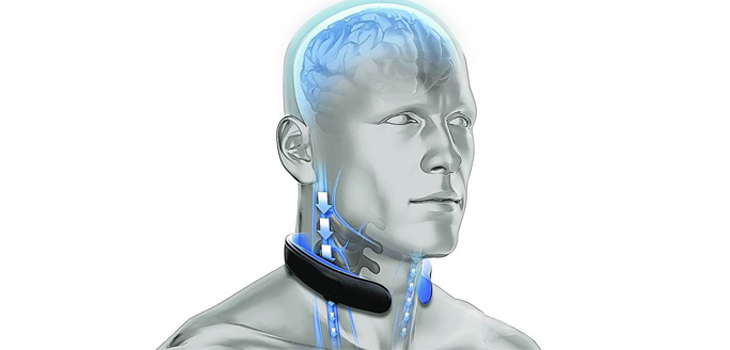
Copying the woodpeckers, researchers invented the Q-Collar, a device that puts pressure on the jugular vein to slow blood outflow following a blow to the head. The slowed outflow of blood increases the blood volume in the skull which, in turn, helps the brain fit more tightly in the skull.
The researchers conducted two tests of the device, one with hockey players and the other with football players. The goal was to find out if the device really could prevent disruption of microstructure and affect the functional performance of the brain.
Researchers recruited 15 hockey players, outfitted them with accelerometers to measure impacts and randomly assigned them to wear the collar or not. At the beginning of the season, they measured the microstructure of the player’s brains. At the end of the season they found differences between the beginning and end of the season for those players who did not wear the collar. Those who wore the collar did not show any significant differences.
When they performed the same test on a group of 42 football players the results were the same. Accelerometers tracked every hit experienced by each player and measured structure and function of each player’s brain before and after the season. The researchers found that the football players who wore the collars received similar protection from the device. The researchers published their study in the British Journal of Sports Medicine.
“The results of the studies demonstrate a potential approach to protecting the brain from changes sustained within a competitive football and hockey season, as evidenced by brain imaging, ” said Greg Myer, M.D., director of sports medicine research at Cincinnati Children’s Hospital. “We still have more data analysis and investigation to do, but this device could be a real game-changer in helping athletes” he said.
Author
React:
Discussion
This is a fascinating development. In my practice we've seen similar outcomes with the revised protocol. The key differentiator seems to be patient selection criteria. Has anyone else noticed the correlation with BMI thresholds?
Great point. I'd push back slightly on the conclusion, the sample size in the cited study is too small to draw population-level inferences. That said, the directional signal is compelling and worth a larger RCT.
We implemented a similar approach last year. Early results are promising but we're still gathering 12-month follow-up data. Happy to share our protocol if anyone is interested.
Join the conversation
Orthopedic professionals are discussing this. Sign in and upgrade to read every comment and add your voice.