
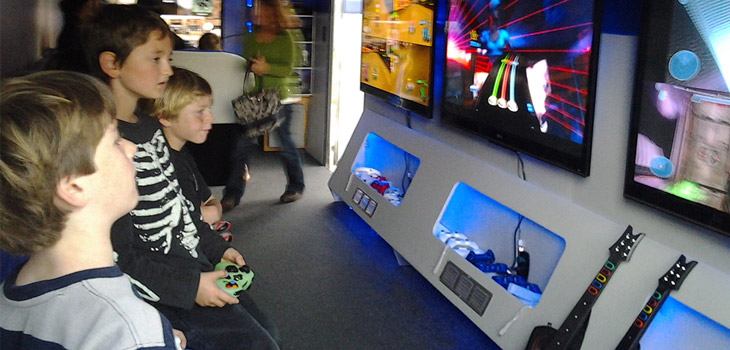
Note to kids…the thumb is meant for other things than gaming. In fact, says The American Academy of Orthopaedic Surgeons (AAOS), thumbs, whole hands, and spines are at risk for injury due to gaming.
Gaming Not Injury-Free, Says AAOS
2 min read Premium comments
Secondary
In a July 11, 2016 new release it states, “One of the most common conditions related to excessive video game use is De Quervain’s tendinosis, an inflammation of the tendons that connect the wrist to the thumb. More informally called ‘gamer’s thumb, ’ the injury is caused by the rapid, repetitive thumb movement associated with electronic game play. The American Academy of Orthopaedic Surgeons (AAOS) recommends that parents monitor the amount of time that kids spend using electronics and encourage them to participate in activities that keeps them fit and healthy.”
“Forcefully pounding a game controller or computer mouse for hours can cause inflammation of the tendons of the hand, as well as neck and back pain, ” said AAOS spokesperson and orthopedic hand surgeon Dori Cage, M.D. “Parents can identify signs of ‘gamer’s thumb’ if a child complains about pain or locking and clicking in thumb. To help reduce the risk of kids having this condition, limit their daily gaming to two hours or less.”
Dr. Cage told OTW, “Overuse injuries involving the computer keyboard, computer mouse and gaming consoles are a common complaint of patient’s seeking orthopaedic care. The frequent patient complaints have led me to look into this problem further.”
“As a parent, varying your children’s activities is important to prevent overuse injuries and to develop a healthy lifestyle. Pokeman Go is the current craze which has taken gamers outside and into the park. As gaming technology evolves, it may very well evolve away from repetitive hand use activity.”
AAOS suggests the following tips to minimize electronics usage and injury risk:
- Take breaks from gaming: Expand your hobbies. Consider playing a sport or walking to the park. If you cannot stop voluntarily, put a program on your computer that will force you to take a break or set an alarm to alert you when it’s time to stop.
- Use good posture. Spending hours slouching on the couch or in front of a computer, gaming can lead to back, neck or arm pains.
- Get some exercise. Upper body and core strength helps with posture, reducing low back complaints and takes the strain off the smaller hand and arm muscles. Kids can achieve this by participating in activities such as running, biking, or swimming.
- Children should have at least 35 to 60 minutes of exercise each day. Without it, they can also miss their chance to build the strong bones they will need later in life.
- Stop gaming if you are getting pain. Do not continue to game if you are experiencing pain.
- Stretch your thumb during your breaks.
- Hold your hand out, palm facing you. Gently bend the tip of your thumb down toward the base of your index finger. Hold for 30 to 60 seconds. Repeat 10 times.
With palm on table, lift thumb up. Hold 10 seconds. Relax and lower thumb. Repeat 10 times.
Author
React:
Discussion
This is a fascinating development. In my practice we've seen similar outcomes with the revised protocol. The key differentiator seems to be patient selection criteria. Has anyone else noticed the correlation with BMI thresholds?
Great point. I'd push back slightly on the conclusion, the sample size in the cited study is too small to draw population-level inferences. That said, the directional signal is compelling and worth a larger RCT.
We implemented a similar approach last year. Early results are promising but we're still gathering 12-month follow-up data. Happy to share our protocol if anyone is interested.
Join the conversation
Orthopedic professionals are discussing this. Sign in and upgrade to read every comment and add your voice.