
Wow. The first week of July was a big week for FDA approvals for orthopedic devices.
First Synthetic Cartilage Approved by FDA
2 min read Premium comments
Secondary
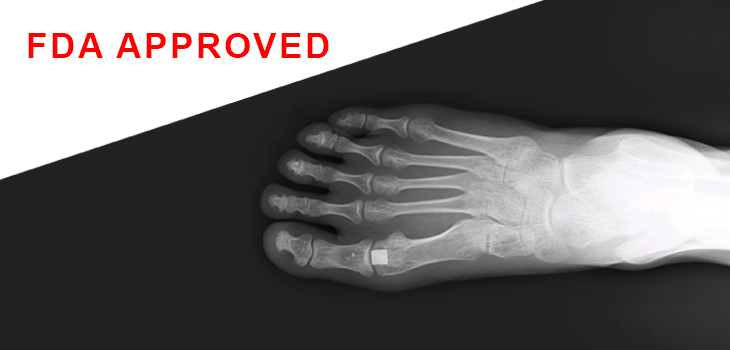
On July 5, 2016, the FDA granted Premarket Approval (PMA) for the Cartiva, Inc.’s Synthetic Cartilage Implant (SCI) for arthritis of the big toe joint. The implant is the first synthetic cartilage device approved by the FDA.
The FDA’s 12-panel of orthopedic experts voted on April 20, 2016 to recommend approval of Cartiva Inc.’s device after determining the device was safe, effective and the benefits outweighed the risks to patients.
Cartiva SCI
Cartiva SCI, according to the company, is intended for the treatment of arthritis at the base of the big toe, the most common arthritic condition in the foot. The current standard of care involves fusing the bones in the arthritic joint with screws and plates. “While fusion is an effective procedure for eliminating pain, it permanently prevents movement of the joint, ” stated the company announcement.
Cartiva’s device is an alternative to fusion and is a biocompatible, biomedical polymer implant designed to have physical properties similar to those of articular cartilage. Damaged cartilage is replaced with a small Cartiva SCI implant that provides a cartilage-like compressible, low-friction and durable bearing surface. The implant provides pain relief and improves both function and motion.
The company said the FDA’s decision was based on a 236-patient, multi-center, prospective, randomized study comparing the device to fusion. It was the largest study ever conducted for this condition.
Clinical Evidence
According to the company, key findings from the Level I clinical study include:
- The Cartiva patient group demonstrated clinical success of 80% for the composite primary endpoint (pain, function and safety) at 24 months compared to 79% success for the fusion group
- Cartiva patients achieved a 93% reduction in median pain
- Cartiva patients demonstrated a 168% improvement in median function of sporting activities and 65% improvement in activities of daily living
- Cartiva patients experienced a 26% improvement in range of motion from baseline
The device has been approved for use outside the U.S. since 2002 and is currently available in Europe, Canada and Brazil. To date, more than 4, 000 implants have been used. It is performed in a simple outpatient procedure lasting approximately 35 minutes. Unlike a fusion procedure, patients may begin weight bearing immediately as tolerated.
Tim Patrick, Cartiva’s president and CEO, said the company will introduce the device at the American Orthopaedic Foot and Ankle Society Annual Meeting in Toronto later in July.
Author
React:
Discussion
This is a fascinating development. In my practice we've seen similar outcomes with the revised protocol. The key differentiator seems to be patient selection criteria. Has anyone else noticed the correlation with BMI thresholds?
Great point. I'd push back slightly on the conclusion, the sample size in the cited study is too small to draw population-level inferences. That said, the directional signal is compelling and worth a larger RCT.
We implemented a similar approach last year. Early results are promising but we're still gathering 12-month follow-up data. Happy to share our protocol if anyone is interested.
Join the conversation
Orthopedic professionals are discussing this. Sign in and upgrade to read every comment and add your voice.