
Researchers from the University of Denver have shown that female soccer players who use a wearable neuromuscular device have a reduced risk of anterior cruciate ligament (ACL) injury.
Female Soccer Athletes Benefit From Wearable Device
1 min read Premium comments
Secondary
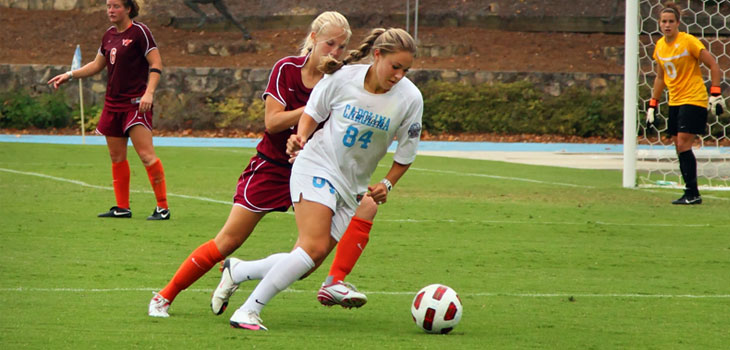
“Our study showed that training with a wearable neuromuscular (WNM) device improved postural control in athletes, without limiting performance, ” said Michael John Decker, Ph.D., from the University of Denver in Denver, Colorado. “Moreover, no athletes in the study experienced an ACL injury during training or over the course of the following season.” A total of 79 elite youth and collegiate female soccer players (age 12-25) in the study trained with a WNM device that applied bi-lateral, topical pressure to the medial quadriceps and hamstring muscles. The athletes performed 7 to 9 weeks of pre-season training with the device consisting of strength and conditioning exercises and on-field team practices. “Research has shown female soccer players have a three times greater risk of ACL injury compared to males, yet only a small portion of soccer coaches are currently utilizing ACL injury risk reduction programs, ” commented Decker. “We hope these devices offer coaches a practical means to overcome participation barriers, opening the door for more organizations and teams to implement similar programs.”
Dr. Decker told OTW, “We hypothesized that training with the wearable device would enhance proprioception but we were surprised to learn that improvements in proprioception were accompanied by improvements in joint motion and loading.
“The proprioceptive and movement benefits of the device may be acquired without a dedicated training program that requires additional time and accumulative exposures. Wearing the device during practice and conditioning may be sufficient to expose the neuromuscular system to achieve the movement benefits.”
Author
React:
Discussion
This is a fascinating development. In my practice we've seen similar outcomes with the revised protocol. The key differentiator seems to be patient selection criteria. Has anyone else noticed the correlation with BMI thresholds?
Great point. I'd push back slightly on the conclusion, the sample size in the cited study is too small to draw population-level inferences. That said, the directional signal is compelling and worth a larger RCT.
We implemented a similar approach last year. Early results are promising but we're still gathering 12-month follow-up data. Happy to share our protocol if anyone is interested.
Join the conversation
Orthopedic professionals are discussing this. Sign in and upgrade to read every comment and add your voice.