
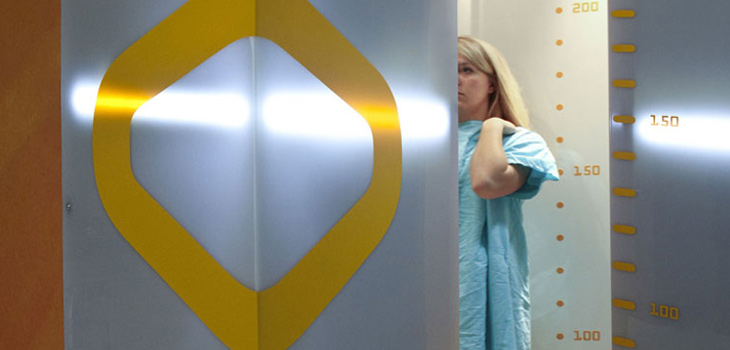
EOS imaging is a company based in Paris, France, with five subsidiaries located in Besancon, France, Cambridge, Massachusetts, Montréal, Canada, Frankfurt, Germany and Singapore. The firm designs, develops and markets a medical imaging system called EOS Systems designed for the treatment of osteoarticular pathologies and orthopedics.
EOS imaging Posts 39% Revenue Leap First Half 2016
1 min read Premium comments
Secondary
The company is authorized to market in 51 countries, including the United States, Japan, China and the European Union. The EOS Group posted 2015 revenues of €21.8 million and employs 122 people.
This year, 2016, has been a banner year for the company according to CEO Marie Meynadier, Ph.D. The company experienced a sharp increase in sales in the first half of 2016, up 39% to €14.1 million.
The company sold 28 EOS® systems during the first half of the year, as compared to 20 during the same period last year.
Revenues from sales of equipment totaled €11.45 million, an increase of 35%. Sales of maintenance contracts increased 68% to €2.22 million, reflecting the continued increase in the installed base of EOS systems under contract.
Meynadier said, “The EOS platform is increasingly being recognized as a standard of care in orthopaedics because of its unique dose reduction and the high quality image and data it produces, which enables physicians to improve and personalize orthopaedic patient care. In addition to our commercial ramp up, the first half of the year included significant steps in China and Korea, (and) the launch of strategic partnerships with two major orthopaedic implant companies in the UK and Japan.”
She added that company officials are delighted with this momentum and will continue their efforts to provide relevant and cost-effective solutions to the challenges within the orthopedic continuum of care.
Author
React:
Discussion
This is a fascinating development. In my practice we've seen similar outcomes with the revised protocol. The key differentiator seems to be patient selection criteria. Has anyone else noticed the correlation with BMI thresholds?
Great point. I'd push back slightly on the conclusion, the sample size in the cited study is too small to draw population-level inferences. That said, the directional signal is compelling and worth a larger RCT.
We implemented a similar approach last year. Early results are promising but we're still gathering 12-month follow-up data. Happy to share our protocol if anyone is interested.
Join the conversation
Orthopedic professionals are discussing this. Sign in and upgrade to read every comment and add your voice.