
K. Donald Shelbourne, M.D., medical director for the Shelbourne Knee Center at Community Westview Hospital in Indianapolis, was inducted into the American Orthopaedic Society for Sports Medicine’s (AOSSM) Hall of Fame on Friday, July 8, during the Society’s Annual Meeting in Colorado Springs, Colorado.
Donald Shelbourne, M.D. Inducted Into AOSSM Hall of Fame
2 min read Premium comments
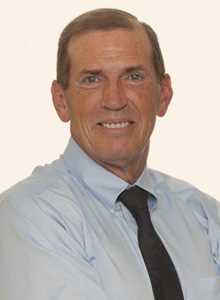
Dr. Shelbourne graduated from Wabash College in 1972, where he was a first team Academic All-American as a football player and he received an NCAA (National Collegiate Athletic Association) post-graduate scholarship for wrestling. He completed medical school and his orthopedic residency at Indiana University Medical School, then went on to do a sports medicine fellowship at the University of Wisconsin in 1981-82.
According to the July 6, 2016 news release, “Dr. Shelbourne served as the team physician for the Indianapolis Colts from 1984 through 1998, and has been an orthopaedic consultant to Purdue University, Wabash College, and area high schools since 1982. He is an associate clinical professor at Indiana University School of Medicine at Indianapolis. He is also on the editorial board of the American Journal of Sports Medicine and serves as a reviewer for many other orthopaedic journals.”
“Dr. Shelbourne became interested in sports medicine when he tore his anterior cruciate ligament [ACL] while playing football in college. He knew when he began his practice that he wanted to concentrate on the treatment, rehabilitation, and research of ACL injuries. Since the beginning of his practice, he established a research department and prospective database for continually recording and evaluating his outcomes after surgery. He has performed more than 6, 500 ACL reconstructions, and the follow-up he has obtained on these patients has allowed him to identify problems with treatment and the factors associated with optimum long-term outcomes. Dr. Shelbourne is best known for his advancement of ACL rehabilitation for obtaining a predictable, successful result while returning patients back to athletic activities quickly. In addition, the successful results from surgery have been maintained in the long-term without causing range of motion or strength loss in the knees. He has published more than 250 journal articles and book chapters, and has presented his findings at national and international meetings.”
“Dr. Shelbourne was elected to the Herodicus Society in 1988. In addition to the Herodicus Society, Dr. Shelbourne is a member of American Academy of Orthopedic Surgeons, The American Orthopaedic Association, American Orthopedic Society for Sports Medicine, ACL Study Group, and Arthroscopy Association of North America.”
Dr. Shelbourne told OTW, “I am truly honored that my research and the research work done by my whole team is being recognized as a significant contribution to merit my induction to the AOSSM hall of fame. I anticipate that our center will continue our patient focused research that concentrates on improving outcomes for sports medicine injuries.”
Author
React:
Discussion
This is a fascinating development. In my practice we've seen similar outcomes with the revised protocol. The key differentiator seems to be patient selection criteria. Has anyone else noticed the correlation with BMI thresholds?
Great point. I'd push back slightly on the conclusion, the sample size in the cited study is too small to draw population-level inferences. That said, the directional signal is compelling and worth a larger RCT.
We implemented a similar approach last year. Early results are promising but we're still gathering 12-month follow-up data. Happy to share our protocol if anyone is interested.
Join the conversation
Orthopedic professionals are discussing this. Sign in and upgrade to read every comment and add your voice.