
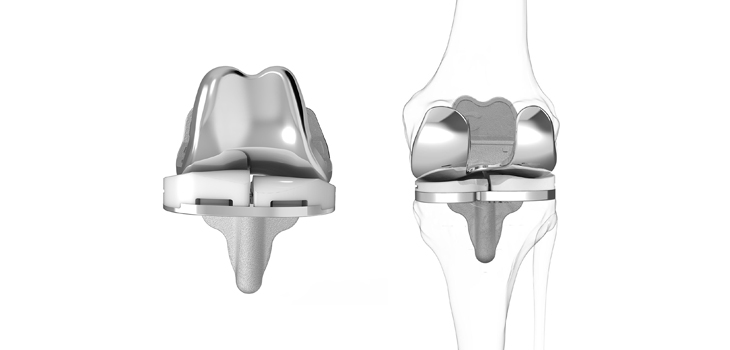
Midway through, ConforMIS, Inc. has some positive results from its ongoing, U.S. multi-center, prospective study of iTotal CR, in which more than 300 patients have been enrolled. The study is financially supported by ConforMIS.
ConforMIS: Positive Results From iTotal CR Study
2 min read Premium comments
Secondary
Researchers examined patient satisfaction after total knee replacement (TKR) with the iTotal CR and found that 92% of patients were satisfied on average at one-year postop. As indicated in the July 6 2016 news release, “In comparison, a previously published study indicates that approximately 20% of patients who receive an off-the-shelf total knee replacement are not satisfied with the results.”
“A satisfied patient is the ultimate goal of knee replacement, ” said Gregory Martin, M.D., a fellowship-trained orthopedic surgeon in Boynton Beach, Florida, and clinical investigator in the study. “A growing body of clinical evidence continues to support my belief that customized implants improve important patient outcome measures like patient satisfaction. With the ConforMIS iTotal CR, I’ve seen a meaningful shift towards happier, more satisfied patients.”
Dr. Martin told OTW, “I find the results of the study particular interesting because it is the first time we are seeing patient satisfaction with total knee replacement exceed 90%. In 2003 the National Institutes of Health Consensus statement on total knee replacement stated 85% of patients are satisfied with the procedure. Since then, numerous studies have confirmed only about 75 to 80% of patients that undergo the procedure are satisfied with their outcome. As the number of patients undergoing the procedure increases and we are now performing hundreds of thousands of total knees annually, this leaves thousands of people dissatisfied after taking personal and financial risk. To see a particular device that is individualized to the patient break through that threshold into the 90 plus percent range of patient satisfaction is game changing. I believe this, combined with other research showing improved kinematics, is validating the concept of shaping the implant to fit the patient rather than making a patient fit an implant.
“As with any long term follow up study, the challenge was getting patients to return for follow up that are feeling well. For all of my total knee patients whether in study or not, I recommend annual follow up for the first few years and then go to every other year. However, despite the recommendations, many patients that are feeling well choose not to follow up unless they have a complaint or a problem. I see this as a trend that limits the ability to get accurate data in long term follow up studies.”
React:
Discussion
This is a fascinating development. In my practice we've seen similar outcomes with the revised protocol. The key differentiator seems to be patient selection criteria. Has anyone else noticed the correlation with BMI thresholds?
Great point. I'd push back slightly on the conclusion, the sample size in the cited study is too small to draw population-level inferences. That said, the directional signal is compelling and worth a larger RCT.
We implemented a similar approach last year. Early results are promising but we're still gathering 12-month follow-up data. Happy to share our protocol if anyone is interested.
Join the conversation
Orthopedic professionals are discussing this. Sign in and upgrade to read every comment and add your voice.