
Todd Loveday is a baseball pitching coach who advises parents to become better informed about pitch counts and required limitations on how many balls a young pitcher can pitch without running a big risk of injury. Loveday said, “If more parents were aware of the risks, they would police the tournament coaches who care more about trophies than their pitchers’ arms.”
Coaches Careless on Baseball Pitching Count
1 min read Premium comments
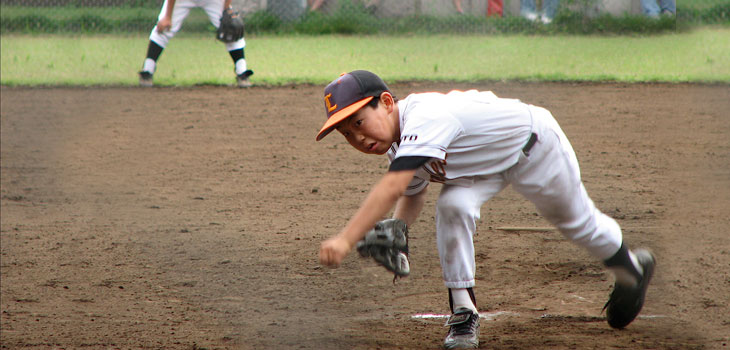
Secondary
The state of Alabama limit for young players is 120 pitches per day at the high school varsity level, 100 at junior varsity and 85 for middle school. But Lovejoy has seen teams ignore required pitching counts as well as Alabama’s high school varsity mandate, which requires three days of rest after throwing 76 or more pitches at the varsity level.
As reported by the sports writer for the Daily Post Athenian of Athens, Tennessee, Stephen Hailey—owner of The Baseball Mission training facility in Cleveland, Ohio—reported one case of an 11-year-old who threw 21 pitches in one game, then 62 in the immediate next game , then played catcher, then threw 105 pitches the next day. Hailey, who studied with orthopedic surgeon James Andrews, M.D., called it “child abuse.”
According the American Sports Medicine Institute the accelerator muscles in the shoulder can recover in a single day after 20 pitches or less. Any pitch number more than that requires multiple days of recovery. Throwing more than 130 pitches in a single day can take a month for the muscles to completely recover, according to Hailey. Hailey said he had seen many cases of a high school pitcher throwing that much in a day. “It brings about delayed onset muscle soreness, ” Hailey said. “Due to muscles being overextended, it stretches them. Tendons and ligaments can recover in one to two hours, but muscles cannot.”
Author
React:
Discussion
This is a fascinating development. In my practice we've seen similar outcomes with the revised protocol. The key differentiator seems to be patient selection criteria. Has anyone else noticed the correlation with BMI thresholds?
Great point. I'd push back slightly on the conclusion, the sample size in the cited study is too small to draw population-level inferences. That said, the directional signal is compelling and worth a larger RCT.
We implemented a similar approach last year. Early results are promising but we're still gathering 12-month follow-up data. Happy to share our protocol if anyone is interested.
Join the conversation
Orthopedic professionals are discussing this. Sign in and upgrade to read every comment and add your voice.