
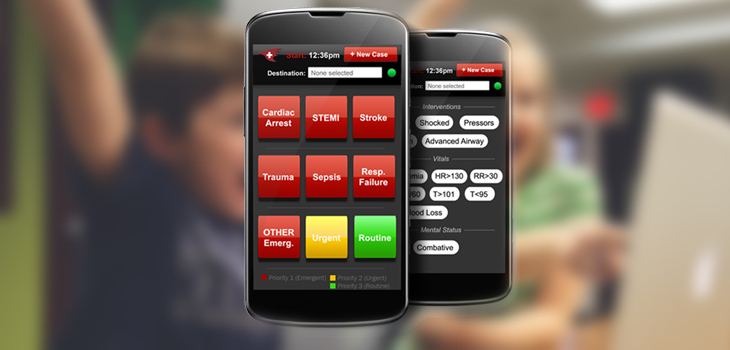
Twiage, an interoperable platform that makes it possible for first responders to share real-time patient data with hospitals via a smartphone app, has won first prize in the American Medical Association’s (AMA) Healthier Nation Innovation Challenge.
Twiage Takes AMA’s First Prize for Lifesaving Technology
1 min read Premium comments
Secondary
In addition to $25, 000, Twiage will have the resources of the AMA’s network of partners that specialize in strategy and design support for entrepreneurs and startups.
“A passion for transforming health care is a quality physicians and medical students share with many pioneering entrepreneurs, ” said AMA CEO and Executive Vice President James L. Madara, M.D., in the June 13, 2016 news release. “To harness this passion for health care innovation, the AMA is expanding efforts to inspire and support physician-led medical advances, and is proud to support the best new ideas to create a healthier nation.”
YiDing Yu, M.D., an internist at Harvard Vanguard Medical Associates and founder of Twiage, told OTW, “Twiage actively works with trauma teams to help triage severity and help the entire trauma team track the patient’s ETA by GPS. This helps trauma teams be better prepared for incoming patients, saving precious time for critical emergencies.”
According to the news release, “All entries to the challenge appeared in the AMA CrowdChallenge Showcase, powered by MedStartr, where physicians, residents, medical students, nurses, patients, hospital staff, health leaders and investors had the opportunity to review and provide feedback on the ideas. This crowd engagement generated nearly 16, 000 online interactions between applicants and reviewers, including votes, follows, interest to pilot, interest to partner, and feedback.”
React:
Discussion
This is a fascinating development. In my practice we've seen similar outcomes with the revised protocol. The key differentiator seems to be patient selection criteria. Has anyone else noticed the correlation with BMI thresholds?
Great point. I'd push back slightly on the conclusion, the sample size in the cited study is too small to draw population-level inferences. That said, the directional signal is compelling and worth a larger RCT.
We implemented a similar approach last year. Early results are promising but we're still gathering 12-month follow-up data. Happy to share our protocol if anyone is interested.
Join the conversation
Orthopedic professionals are discussing this. Sign in and upgrade to read every comment and add your voice.