
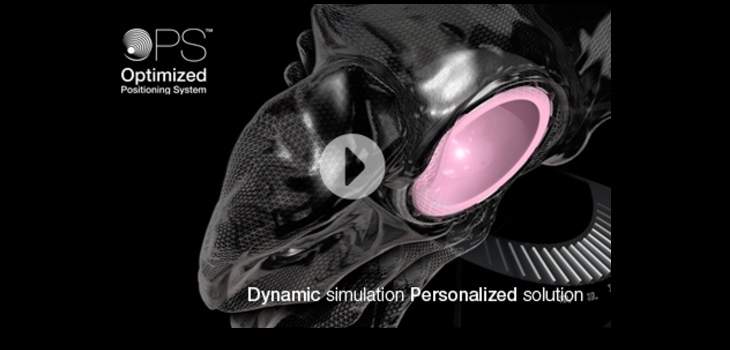
The first technology that optimizes the orientation of a patient’s acetabular component by utilizing a laser guided Patient Specific Instrument platform has received 510(k) clearance from the U.S. Food and Drug Administration (FDA). Called the Optimized Positioning System (OPS), the system has been in use in Europe and Australia since its acquisition by Corin Group plc in 2014.
Patient Positioning System Gains FDA Nod
1 min read Premium comments
Secondary
Jim Pierrepont, Corin’s Head of Procedural Technologies, said that the company is delighted to gain access to the U.S. market and be the first company to offer “such an exciting technology. This solution, ” he added, “ is a significant step forward in helping to improve the performance of total hip replacement, as conventional acetabular cup placement does not take into account the patient’s individual functional movement and relies instead on guidance for cup positioning defined some 36 years ago.”
Corin’s U.S. President Paul Berman said, “OPS is the first orthopedic technology to facilitate functional implant positioning without adding complexity or substantial cost to the surgical procedure.” Corin USA is a subsidiary of Corin Group plc and is located in Tampa, Florida.
Author
React:
Discussion
This is a fascinating development. In my practice we've seen similar outcomes with the revised protocol. The key differentiator seems to be patient selection criteria. Has anyone else noticed the correlation with BMI thresholds?
Great point. I'd push back slightly on the conclusion, the sample size in the cited study is too small to draw population-level inferences. That said, the directional signal is compelling and worth a larger RCT.
We implemented a similar approach last year. Early results are promising but we're still gathering 12-month follow-up data. Happy to share our protocol if anyone is interested.
Join the conversation
Orthopedic professionals are discussing this. Sign in and upgrade to read every comment and add your voice.