
Louis C. Argenta, M.D., FACS, has received the 2016 Jacobson Innovation Award of the American College of Surgeons (ACS) at a dinner held in his honor on June 3, 2016, in Chicago, Illinois. Dr. Argenta is professor and chairman emeritus in the department of plastic and reconstructive surgery, Wake Forest University School of Medicine, Winston-Salem, North Carolina.
Louis Argenta, M.D. Receives 2016 Jacobson Innovation Award
2 min read Premium comments
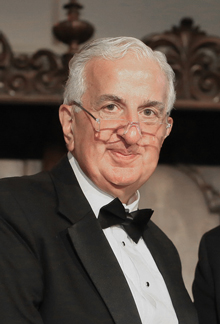
According to the June 6, 2016 news release, “The prestigious Jacobson Innovation Award honors living surgeons who have been innovators of a new development or technique in any field of surgery and is made possible through a gift from Julius H. Jacobson, II, M.D., FACS, and his wife Joan. Dr. Jacobson is a general vascular surgeon known for his pioneering work in the development of microsurgery.”
Dr. Argenta, a Fellow of the American College of Surgeons (FACS), was honored with this international surgical award in recognition of his work with Wake Forest bioengineer Michael Morykwas, Ph.D., in the development of Vacuum-Assisted Closure (VAC), a paradigm-changing approach to the treatment of difficult wounds and burns.
As indicated in the news release, “VAC is estimated to have prevented one million amputations and has been used in the treatment of over 14 million patients around the world. It has been used by U.S. military medical personnel for almost all battlefield injuries in Iraq and Afghanistan, dramatically reducing wound infection and complications, and significantly improving the outcomes of wounded soldiers.”
“Dr. Argenta is an internationally recognized expert in mechanobiology—the application of controlled mechanical energy to induce biological changes in living tissue—and its applications in clinical medicine. He helped develop and popularize the surgical technique of tissue expansion to generate living tissue for reconstruction. Tissue expansion is now used throughout the world for complicated breast, facial, and scalp reconstructions.”
Throughout his career, Dr. Argenta has received numerous awards, including the 2015 Wake Forest University Medallion of Merit Award, the 2013 American Association of Plastic Surgeons Achievement Award for Clinical Research, and the Plastic Surgery Foundation 2012 Outstanding Achievement in Basic and Translational Research Award, among many others.
Dr. Argenta told OTW, “I think that the proudest moment was with the first patient to receive a very experimental form of the VAC. The patient was dying of a massive open wound complicated by sepsis, renal failure and pneumonia. The human use committee felt that his odds of surviving the day were close to zero. We placed an experimental form of the VAC on him and within 24 hours he had stabilized, the wound was reduced in size, and he was responding to commands. I knew at that moment that we had done something very significant.”
Author
React:
Discussion
This is a fascinating development. In my practice we've seen similar outcomes with the revised protocol. The key differentiator seems to be patient selection criteria. Has anyone else noticed the correlation with BMI thresholds?
Great point. I'd push back slightly on the conclusion, the sample size in the cited study is too small to draw population-level inferences. That said, the directional signal is compelling and worth a larger RCT.
We implemented a similar approach last year. Early results are promising but we're still gathering 12-month follow-up data. Happy to share our protocol if anyone is interested.
Join the conversation
Orthopedic professionals are discussing this. Sign in and upgrade to read every comment and add your voice.