
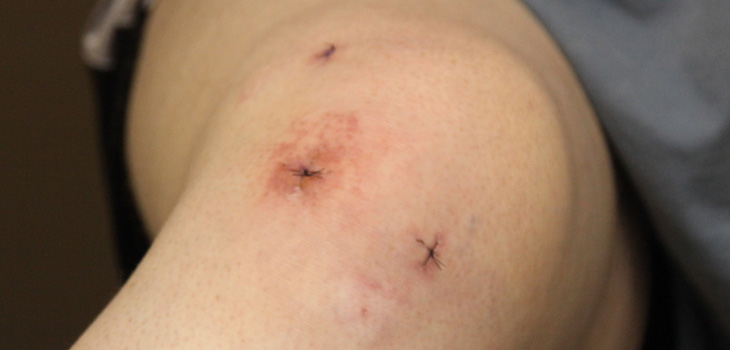
Knee arthroscopy surgeons, perhaps unwittingly, participated in opioid creep with their patients in the years from 2004 to 2012.
Knee Arthroscopy Surprising Contributor to Opioid Overuse
2 min read Premium comments
Secondary
In a study published online by the Journal of the American Medical Association (JAMA), Hannah Wunsch, M.D., M.Sc., of Sunnybrook Health Sciences Centre, Toronto, and colleagues assessed trends in the amount of hydrocodone/acetaminophen and oxycodone/acetaminophen prescribed from 2004-2012, two opioids commonly used for postoperative pain management.
The study included health care encounters of approximately 14 million primarily commercially insured patients, with information on pharmacy and medical claims with data on services and procedures. The sample included opioid-naive adults (n = 155, 297) who underwent 1 or more of 4 low-risk surgical procedures in 2004, 2008, or 2012: carpal tunnel release, laparoscopic cholecystectomy (gallbladder removal), inguinal hernia repair, or knee arthroscopy. The researchers assessed the proportion of patients who filled any opioid prescription (and specifically hydrocodone/acetaminophen or oxycodone/acetaminophen) in the seven days after hospital discharge (inpatients) or on the procedure date (outpatients).
Within seven days of their surgery 80% of the 155, 297 patients in the study (taken from the Clinformatics Data Mart Database) had filled a prescription for an opioid pain killer. First author on the study, Dr. Wunsch said, “More and more we recognize that what we do in the hospital is only part of the story and that many of the problems faced by patients occur after hospital discharge. There is a paucity of data on prescribing practices for patients after surgery.”
Wunsch said that the study authors had been surprised by the amount of opioids that doctors had prescribed per day for procedures that are considered relatively minor and, therefore unlike to be painful for most people.
Wunsch also raised the question that the increase in opioids prescribed may be due to the fact that pain was being undertreated in many patients, or it may be an attempt on the part of doctors to minimize the number of patients who need to be dealt with after discharge.
Bob Kronenmeyes, writing for General Surgery News, quoted Joseph V. Pergolizzi, Jr., M.D., adjunct assistant professor of medicine at Johns Hopkins School of Medicine, in Baltimore, and a Pain Medicine News editorial advisory board member as saying that pain is very individualized and some patients may require more pain relief than others. Because these patients are no longer under the direct supervision of a physician once discharged from the hospital, it is important that they “have adequate analgesic coverage, ” he said. Out of a fear that patients were not adequately covered for pain relief, he suggested that physicians were potentially proscribing more than their patients needed or could use.
Author
React:
Discussion
This is a fascinating development. In my practice we've seen similar outcomes with the revised protocol. The key differentiator seems to be patient selection criteria. Has anyone else noticed the correlation with BMI thresholds?
Great point. I'd push back slightly on the conclusion, the sample size in the cited study is too small to draw population-level inferences. That said, the directional signal is compelling and worth a larger RCT.
We implemented a similar approach last year. Early results are promising but we're still gathering 12-month follow-up data. Happy to share our protocol if anyone is interested.
Join the conversation
Orthopedic professionals are discussing this. Sign in and upgrade to read every comment and add your voice.