
One of the hedge fund managers charged recently in an FDA insider trading scandal has reportedly committed suicide.
FDA Insider Trading Suspect Commits Suicide
2 min read Premium comments
Secondary
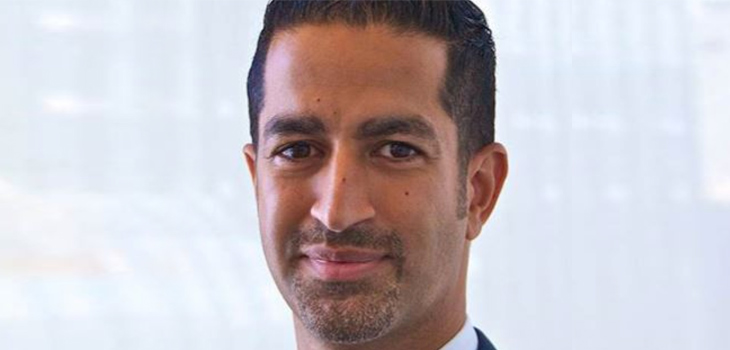
Reuters reported on June 21, 2016 that Visium Asset Management LP fund manager, Sanjay Valvani was found dead by his wife on June 20 at their Brooklyn home with a wound to his neck. A suicide note and knife were found, according to a police spokesperson.
As we reported earlier, Valvani was arrested and charged on June 15, 2016 with fraudulently making $25 million by getting advanced information about U.S. Food and Drug Administration approvals of generic drug applications.
The inside information, according to prosecutors, was provided by Gordon Johnston, a consultant and former employee at the FDA, who got tips from a friend, who still works at the agency. Valvani passed some of the tips to Christopher Plaford, then a Visium portfolio manager, who made his own illegal trades, prosecutors said. Johnston worked at the FDA for a dozen years and, allegedly, remained in close contact with the former colleagues while working as vice president of regulatory sciences at the Generic Pharmaceutical Association (GPhA), from which he resigned in 2011 and worked as the group’s representative to FDA.
According to prosecutors, “Between late 2009 and early 2010, Johnston learned from an OGD (Office of Generic Drugs) Division Director, who was a friend and former mentee to Johnston and with whom Johnston had a decades-long close and personal relationship, that an enoxaparin ANDA [abbreviated new drug application] was ‘moving’ toward approval, meaning that OGD’s approval was becoming more imminent, ” according to the complaint. “Johnston was immediately aware, upon learning this information, that he had received valuable nonpublic information. In particular, Johnston knew that the approval of an enoxaparin ANDA was valuable news because it would be the first time a generic counterpart to the brand-name drug Lovenox was approved.”
Bloomberg reported that Johnston “duped a close friend at the FDA to give him inside information.” The FDA has declined to comment.
Valvani’s lawyers, Barry Berke and Eric Tirschwell, called his death a “horrible tragedy that is difficult to comprehend.”
“We hope for the sake of his family and his memory that it will not be forgotten that the charges against him were only unproven accusations and he had always maintained his innocence, ” they added.
Valvani pleaded not guilty to charges including securities fraud, wire fraud and conspiracy and had been free on $5 million bond. Plaford and Johnston, according to Reuters, secretly pleaded guilty earlier this month and agreed to cooperate in the case against Valvani.
As a partner at Visium Asset Management, Valvani was reportedly instrumental in building it into an $8 billion firm that counted some of the country’s biggest pension funds as clients.
Last Friday, Jacob Gottlieb, Visium’s founder, told investors that it was impossible to continue managing the firm because of the negative impact from the publicity surrounding Valvani’s arrest and substantial investor withdrawals. Gottlieb wrote to clients that one of the firm’s portfolios is being sold to AllianceBernstein and that the Balanced Fund, where Valvani worked, was being shut down.
Author
React:
Discussion
This is a fascinating development. In my practice we've seen similar outcomes with the revised protocol. The key differentiator seems to be patient selection criteria. Has anyone else noticed the correlation with BMI thresholds?
Great point. I'd push back slightly on the conclusion, the sample size in the cited study is too small to draw population-level inferences. That said, the directional signal is compelling and worth a larger RCT.
We implemented a similar approach last year. Early results are promising but we're still gathering 12-month follow-up data. Happy to share our protocol if anyone is interested.
Join the conversation
Orthopedic professionals are discussing this. Sign in and upgrade to read every comment and add your voice.