
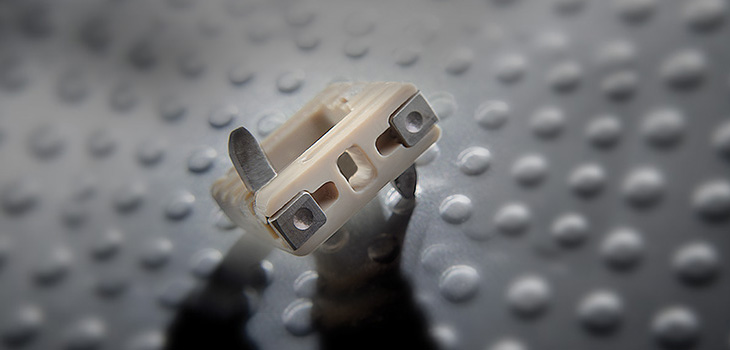
Exactech, Inc., a developer and producer of bone and joint restoration products and biologic materials for extremities, knee, hip and spine, announced the full launch of the new Acapella One Cervical Spacer System.
Exactech: Full Launch of Acapella Spacer System
1 min read Premium comments
Secondary
As indicated in the June 20, 2016 news release, “With the full launch of Acapella One, a cervical cage pre-assembled with integrated anchors, surgeons can restore disc height while providing integrated fixation to prevent device migration during anterior cervical spinal fusions. The Acapella One implants are available in two footprints, six heights and three sagittal profiles, including an anatomic domed design. The overall procedure is simplified by the unique design of the cage, which allows for single-step deployment of both the integrated anchors simultaneously into the vertebral endplates.”
“Exactech’s product development team is dedicated to providing a simplified surgical technique for surgeons and the potential for reduced operative time for patients, ” said company Vice President and General Manager of Spine and Biologics Bruce Thompson. “With the initial results from the pilot launch of the Acapella One system, we believe we will deliver on both of these goals.”
Thompson told OTW, “The most exciting moment for us in preparation for the full launch was seeing the reaction of our pilot group of clinical evaluators during the initial surgeries. The surgical time was greatly reduced for them as well as the amount of impact needed compared to previous systems they had been using. All of this combined makes a big difference for surgeons, hospitals and patients; and we are excited to be able to expand the offering of this product.
“With more than 30 years dedicated to helping patients improve their quality of life, Exactech continues to expand their innovative spine product lines. Our products are specifically designed to improve patient outcomes and improve the surgeons’ experiences in the operating room. Acapella One was developed with the goal of achieving both of these crucial objectives, and from the experience to date, we believe we have succeeded.”
React:
Discussion
This is a fascinating development. In my practice we've seen similar outcomes with the revised protocol. The key differentiator seems to be patient selection criteria. Has anyone else noticed the correlation with BMI thresholds?
Great point. I'd push back slightly on the conclusion, the sample size in the cited study is too small to draw population-level inferences. That said, the directional signal is compelling and worth a larger RCT.
We implemented a similar approach last year. Early results are promising but we're still gathering 12-month follow-up data. Happy to share our protocol if anyone is interested.
Join the conversation
Orthopedic professionals are discussing this. Sign in and upgrade to read every comment and add your voice.