
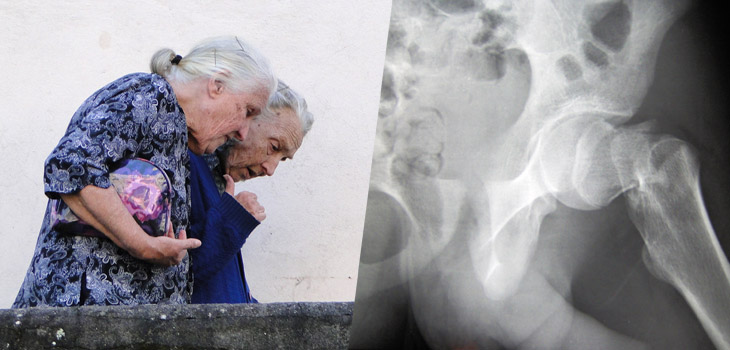
A new survey from New York State-based Northwell Health reveals that more than 7 in 10 older adults who suffer hip fractures aren’t told they have the osteoporosis.
Elderly Hip Fracture Patients Not Told They Have Osteoporosis
2 min read Premium comments
Secondary
As indicated in the May 19, 2016 news release, “Geriatric fellow Mia Barnett, M.D., led a telephone survey of 42 hip fracture patients ages 65 and older that showed a startling level of misinformation and mismanagement surrounding osteoporosis among both clinicians and patients. A majority (57%) of patients reported their hospital physicians had not suggested osteoporosis medication after their hip fracture, and 25% said they would reject taking such prescribed drugs. Additional results indicated that 57% of patients reported their hospital physicians had not suggested taking prescription osteoporosis medication after hip fracture, and 36% hadn’t received a prescription for such medication. For most of the 64% who had been taking so-called osteoporosis ‘treatment, ’ this consisted of calcium and vitamin D—a combination the Northwell study authors deemed ’useless’ at preventing osteoporotic fractures.”
Dr. Barnett worked with senior author Gisele Wolf-Klein, M.D., director of geriatric education for Northwell Health, and co-investigator Stuart Weinerman, M.D., an endocrinologist at Northwell Health.
“You can die after a hip fracture, and you’re at great risk of prolonged complications, ” said Dr. Wolf-Klein. “You can also be left as an invalid, a fear of many older adults. When we think about how preventable hip fractures are, the fact that most patients aren’t told or understand they have osteoporosis—a disease that can be treated—is an enormous problem.”
According to the news release, “After hip fracture, 38% of study participants sustained a fall within a year, and 44% of these patients suffered an additional fracture.”
Dr. Barnett told OTW, “During my residency training, I was shocked and disturbed by the number of our older adults who were being readmitted to the hospital with a second hip fracture without having any recollection of a prior discussion of osteoporosis after their first fracture. I wanted to determine why patients were falling through the cracks in their osteoporosis treatment and try to come up with a way to fix the problem.“
“I think the main take home point from the preliminary data is that patients are very willing to hear from many members of the hospital or rehabilitation or primary care physicians about osteoporosis treatment options. It need not be only the burden of orthopedists. However, we should make sure that the message about osteoporosis and need to address it to avoid recurrent fractures is delivered at some point—and probably at several points—during the continuum of care, since patients may not always hear the message the first time around, particularly right after their surgery.”
React:
Discussion
This is a fascinating development. In my practice we've seen similar outcomes with the revised protocol. The key differentiator seems to be patient selection criteria. Has anyone else noticed the correlation with BMI thresholds?
Great point. I'd push back slightly on the conclusion, the sample size in the cited study is too small to draw population-level inferences. That said, the directional signal is compelling and worth a larger RCT.
We implemented a similar approach last year. Early results are promising but we're still gathering 12-month follow-up data. Happy to share our protocol if anyone is interested.
Join the conversation
Orthopedic professionals are discussing this. Sign in and upgrade to read every comment and add your voice.