
Brian J. Galinat, M.D., Named to AAOS Board
Brian J. Galinat, M.D., New to AAOS Board; Outpatient Shoulder Arthroplasty; Kenneth A. Kearns, M.D., Joins Philadelphia Hand Center
6 min read Premium comments
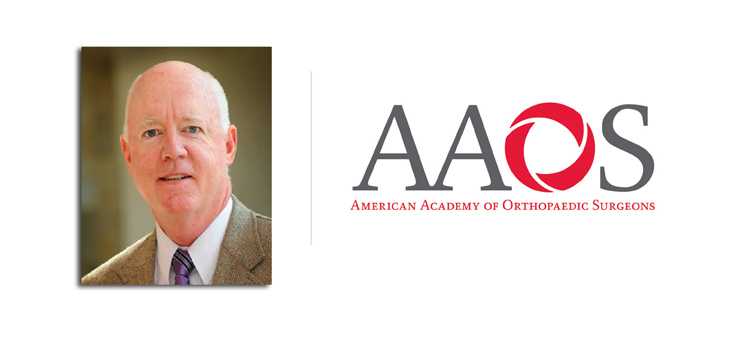
Brian Galinat, M.D., MBA, chair of the Department of Orthopaedic Surgery and physician Lead of the Musculoskeletal Service Line at Christiana Care Health System, has been named to the Board of Directors of the American Academy of Orthopaedic Surgeons (AAOS).
Dr. Galinat completed his orthopedic residency at Thomas Jefferson University Hospitals and did a shoulder/sports-medicine fellowship at The Hospital for Special Surgery. He received his Master of Business Administration at the University of Pennsylvania’s Wharton School in 2014, earning the Dean’s Spirit Award. He is a member of the American Shoulder and Elbow Surgeons Society. Dr. Galinat was team doctor for the Wilmington Blue Rocks from 1993 to 2006 and a team doctor for U.S. Soccer from 1991 to 2005.
He was elected to the Board of the American Academy of Orthopaedic Surgeons for a term starting in 2016 and ending in 2018. He is the past Delaware representative to the Board of Councilors of the American Academy of Orthopaedic Surgeons and served on the AAOS Coding, Coverage and Reimbursement Committee. Dr. Galinat is also a member of the American Orthopaedic Association (AOA) and the AOA Own The Bone Committee.
Asked about his goals for the first three months, Dr. Galinat told OTW, “During the early part of this two-year opportunity to serve our Academy and its members, the primary goal is to gain a better understanding of the breadth of the ongoing activities. The orientation session and early Board meetings have been like drinking from a firehose. As a member since 1991 and as the former Board of Councilor representative from Delaware, I thought I was fairly aware of the efforts of our Academy to preserve our ability to care for our patients. The reality is that our leadership—from the Presidential Line, to our CEO Karen Hackett and the great staff in Rosemont and D.C.—is deeply involved in many, many issues. They are singularly focused on doing what is needed to continue to improve musculoskeletal care.”
As for what past experience has best prepared him for this new role, Dr. Galinat noted, “There is no one thing that can be singled out over a nearly 30-year career. As an at-large member without significant academic credentials, I feel an obligation to be one of the voices of the private practice orthopedic surgeon on the Board of Directors. We are in a time of apparent significant change in how the money flows through the healthcare system. While a Councilor, I was also on the AAOS Coding Coverage and Reimbursement Committee and was able to attend a few RBRVS Update Committee meetings with the AAOS team led by Dr. Dale Blaiser. The Wharton MBA I completed in 2014 gave me a deeper understanding of the role of financial incentives in modifying behavior. Over the past decade, I also have became more involved in the administration of musculoskeletal care in our community by working with our hospital, Christiana Care Health System in northern Delaware.”
“Managing the relationship between a community’s orthopedic surgeons and hospitals is an essential component of providing the best possible care. Perhaps that is where I can provide the most insight to our Board of Directors and our members. However, at this early point in time, I am still humbled and thankful to have been selected.”
New Campbell Clinic Study Finds Outpatient Total Shoulder Arthroplasty Safe
If you and your shoulder enter an outpatient facility for a total shoulder arthroplasty (TSA), will it be safe? This fundamental question was recently addressed by researchers from Campbell Clinic, who undertook a matched cohort study.
Quin Throckmorton, M.D., an orthopedic surgeon at that institution, worked with colleagues to compare episode-of-care complications in matched cohorts of patients undergoing anatomic TSA as an outpatient or inpatient procedure.
Dr. Throckmorton told OTW, “The increased focus on outpatient surgery is emanating from pressure on the healthcare system, which now demands the highest quality care at the lowest cost. In most practices, though, we don’t control the hospital service lines so we have no control over costs. However, in the ambulatory surgery center environment, we often have more control over the service line. It is clearly an opportunity to cut costs, and it fits well with the intuitive idea that patients are happier when they can go home on the same day of their surgery.”
The researchers looked at two different cohorts of 30 patients each, matched for age and comorbidities: patients who had surgery in an ambulatory surgery center (ASC) and patients whose surgery took place in a traditional inpatient hospital setting. The study compared episode of care (90-day) complications, including hospital readmission rates, blood transfusions, cardiopulmonary events, and re-operation rates.
Dr. Throckmorton reported, “We happily found no safety issues. There were no readmissions, cardiopulmonary complications, or re-operations in either group, and complication rates were the same in the two cohorts. So there were no differences in these healthy people who underwent this procedure in the surgery center or the hospital. I will be the first to say, however, that outpatient total shoulder arthroplasty is a very narrow part of any joint replacement practice. And I am not at all saying that everyone should have outpatient joint surgery. Candidates must be very carefully selected.”
As for what type of patient an orthopedic surgeon might hesitate to operate on in an outpatient setting, Dr. Throckmorton noted, “The issues that will make a case borderline are cardiopulmonary in nature such as preexisting lung problems like sleep apnea or COPD, or a history of heart disease. In those cases we confer closely with the anesthesia staff.”
“My advice to colleagues is to do this in an environment where you have control over the service line and the ability to evaluate your process in order to keep track of how you are doing. That’s because I would qualify this as ‘disruptive innovation.’ There is a long history of these procedures being done in an inpatient setting, so moving them to the outpatient environment may not initially be seen as a great idea. But our practice is supportive of innovation, and I believe we came together and created a solid program. We are continuing to monitor our efforts in this area to ensure that safety, patient satisfaction and costs are all optimized. It’s a win-win-win situation.”
Kenneth A. Kearns, M.D., Joins Philadelphia Hand Center
Kenneth A. Kearns, M.D., an orthopedic surgeon with a specialization in shoulder and elbow surgery, has joined the Philadelphia Hand Center (PHC).
Dr. Kearns’ expertise includes advanced arthroscopic surgical procedures, joint replacements, minimally invasive surgical procedures, as well as comprehensive upper extremity fracture care from the forearm to the shoulder, including the clavicle (collar bone).
A graduate of Colby College and the University of Toledo School of Medicine, Dr. Kearns undertook an orthopedic residency at Thomas Jefferson University Hospital (TJUH). He then completed an orthopedic fellowship at the TJUH/Rothman Institute Shoulder and Elbow Orthopaedic Program where he was recognized as a cutting-edge research physician, receiving multiple awards by both the Orthopaedic Research and Education Foundation and the Pennsylvania Orthopaedic Society.
Dr. Kearns told OTW, “We initially started looking to move back to the area from NYC because my wife is from Philadelphia and as we soon expect our first child, we wanted to be closer to family. With that being said, we decided that we’d only relocate for the right opportunity. The Philadelphia Hand Center was the perfect match for us. The group was looking to expand its practice and develop into a comprehensive upper extremity practice. As the only fellowship trained shoulder and elbow surgeon in the practice, my goal is to develop this aspect and expand the elite services of the Hand Center into the elite hand to shoulder resource for the surrounding area. Also, I plan on continuing to improve the quality of patient care through research. My resources were limited at my prior practice, and now with Thomas Jefferson’s academic affiliation and the resources of the Philly Hand Center, I can effectively proceed with related studies.”
“I have had excellent training to become a fellowship shoulder and elbow surgeon. Once in practice, my knowledge continued to expand, as I was the only upper extremity surgeon in my group who performed shoulder & elbow replacements, complex revision surgeries and fractures. This has allowed me to surpass my colleagues in experience and pure volume compared to those who are at the same point in their career. Lastly, as a college and continued weekend warrior, I understand the psyche of the average patient and their desire to return to whatever it is that they love in the quickest, most efficient way possible, ” said Dr. Kearns.
React:
Discussion
This is a fascinating development. In my practice we've seen similar outcomes with the revised protocol. The key differentiator seems to be patient selection criteria. Has anyone else noticed the correlation with BMI thresholds?
Great point. I'd push back slightly on the conclusion, the sample size in the cited study is too small to draw population-level inferences. That said, the directional signal is compelling and worth a larger RCT.
We implemented a similar approach last year. Early results are promising but we're still gathering 12-month follow-up data. Happy to share our protocol if anyone is interested.
Join the conversation
Orthopedic professionals are discussing this. Sign in and upgrade to read every comment and add your voice.