
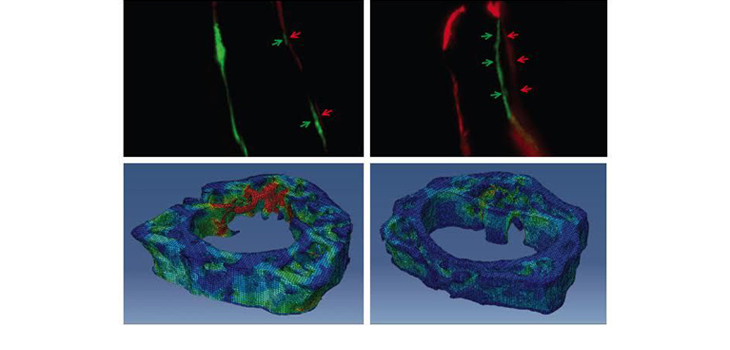
Bone Biologics Corporation, a company focused on regenerative medicine, has signed an option agreement with the University of California, Los Angeles, to exclusively license the use of the bone growth factor Nell-1 for the treatment of osteoporosis. Osteoporosis, the severe loss of bone mass, is currently treated with drugs that inhibit the osteoclasts. Nell-1, according to its supporters, works by inducing the osteoblasts.
Bone Biologics Signs With UCLA for Nell-1
1 min read Premium comments
Secondary
Bone Biologics is funding the development of a Nell-1-based product for use as a bone graft substitute to be used on bone regeneration in spinal fusion procedures. Company officials state that Nell-1 has already demonstrated an ability to form bone with a significantly greater safety profile, making it a more attractive treatment modality than other bone growth factors and implanted devices.
Bone Biologics President and CEO Steve La Neve, “We believe that Nell-1 may have significant advantages over currently-available osteoporosis therapies. We intend to meet the requirements that would allow Bone Biologics to exercise the option to become the exclusive licensee for the use of Nell-1 for osteoporosis therapy. These requirements include the demonstration of Nell-1’s ability to target multi-billion-dollar target markets in osteoporosis and the demonstration of efficacy in animals. Given the development path we are taking with Nell-1 in the spinal fusion market, we expect to be able to build on that experience as we seek an opportunity to develop Nell-1 for osteoporosis.”
Author
React:
Discussion
This is a fascinating development. In my practice we've seen similar outcomes with the revised protocol. The key differentiator seems to be patient selection criteria. Has anyone else noticed the correlation with BMI thresholds?
Great point. I'd push back slightly on the conclusion, the sample size in the cited study is too small to draw population-level inferences. That said, the directional signal is compelling and worth a larger RCT.
We implemented a similar approach last year. Early results are promising but we're still gathering 12-month follow-up data. Happy to share our protocol if anyone is interested.
Join the conversation
Orthopedic professionals are discussing this. Sign in and upgrade to read every comment and add your voice.