
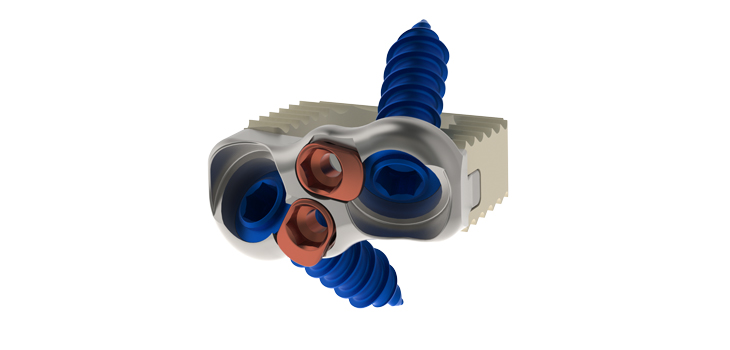
Amendia, Inc., located in Marietta, Georgia, is a provider of spinal technologies, has launched its latest product, the Ceres C Stand-alone Cervical Interbody. The device is a PEEK interbody spacer combined with a titanium plate and screws. It is designed for anterior cervical interbody fusions in skeletally mature patients with degenerative disc disease with accompanying radicular symptoms at one level from C2-T1.
Amendia Introduces New Cervical Interbody Device
1 min read Premium comments
Secondary
The cervical interbody utilizes a cam locking mechanism designed to minimize steps and save operating room time. Dual cam locks featured in the titanium plate prevent screw back-out. According to the company description, the combination of the biased screw angles and fixed and variable screw options allows for either a rigid or semi-rigid construct. Multiple sizes and lordotic options are available to help achieve optimal surgical placement.
“The Ceres-C stand-alone device is a simple, no steps wasted method of cervical fixation with a minimal anterior profile. The intraoperative capabilities of the Ceres-C system allow surgeons to make implant and fixation decisions while in surgery thus eliminating multiple sets and trays, ” said Krzysztof Siemionow, M.D., chief of spine surgery and assistant professor of orthopedics and neurosurgery at the University of Illinois Hospital.
Amendia Executive Vice President of Research & Development Lawrence Boyd, Ph.D. said, “The Ceres-C is the latest addition to our comprehensive product offerings. In addition to the potential to reduce operating time, it provides surgeons with a versatile new cervical technology with considerable flexibility and usability in the operating room.”
Author
React:
Discussion
This is a fascinating development. In my practice we've seen similar outcomes with the revised protocol. The key differentiator seems to be patient selection criteria. Has anyone else noticed the correlation with BMI thresholds?
Great point. I'd push back slightly on the conclusion, the sample size in the cited study is too small to draw population-level inferences. That said, the directional signal is compelling and worth a larger RCT.
We implemented a similar approach last year. Early results are promising but we're still gathering 12-month follow-up data. Happy to share our protocol if anyone is interested.
Join the conversation
Orthopedic professionals are discussing this. Sign in and upgrade to read every comment and add your voice.