
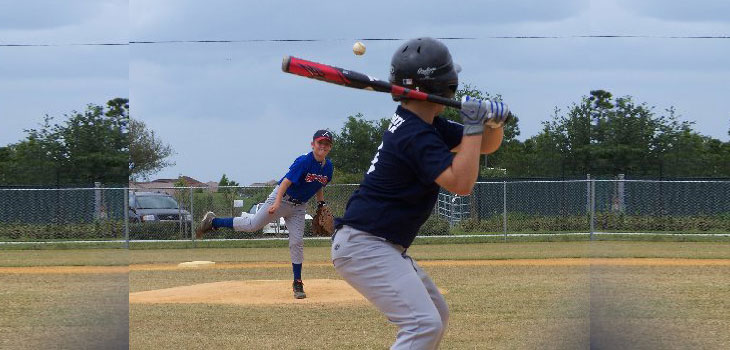
Baseball, which once featured the boys of summer, has now become a year round sport. It is not just Little League any more. Now it is travel teams and indoor sports facilities that allow for constant practice. This lengthy season of baseball may be fine for most of the players but it is not good for the pitchers. Former pitcher and writer Gary Phillips wrote, “The human arm, especially an undeveloped youthful one, is not meant to withstand the stress that comes with constant pitching.”
Year-Round Baseball Hurts Young Pitchers
1 min read Premium comments
Secondary
An article in the American Journal of Sports Medicine reported that pitchers between 15 and 19 years old were the patients for 56.8% of the Tommy John surgeries that were performed between 2007 and 2011. That is more Tommy John surgeries than were performed on any other age group. Tommy John surgery is a procedure that is meant to reconstruct ulnar collateral ligament (UCL) tears in the arm.
Phillips reports that UCL tears have become an epidemic in Major League Baseball. He writes that 15 to 20 big league pitchers of the past might have needed that specialized surgery each year. That number has risen to 30 in each of the last three years.
What should be done? Young pitchers should be discouraged from throwing too many balls. Coaches should count pitches, not innings. Young pitchers should be taught proper mechanics and training regimes. They should be given enough rest between games. Coaches should come to grips with the fact that making baseball a year-round sport is potentially damaging to their ambitious and talented young pitchers.
Author
React:
Discussion
This is a fascinating development. In my practice we've seen similar outcomes with the revised protocol. The key differentiator seems to be patient selection criteria. Has anyone else noticed the correlation with BMI thresholds?
Great point. I'd push back slightly on the conclusion, the sample size in the cited study is too small to draw population-level inferences. That said, the directional signal is compelling and worth a larger RCT.
We implemented a similar approach last year. Early results are promising but we're still gathering 12-month follow-up data. Happy to share our protocol if anyone is interested.
Join the conversation
Orthopedic professionals are discussing this. Sign in and upgrade to read every comment and add your voice.