
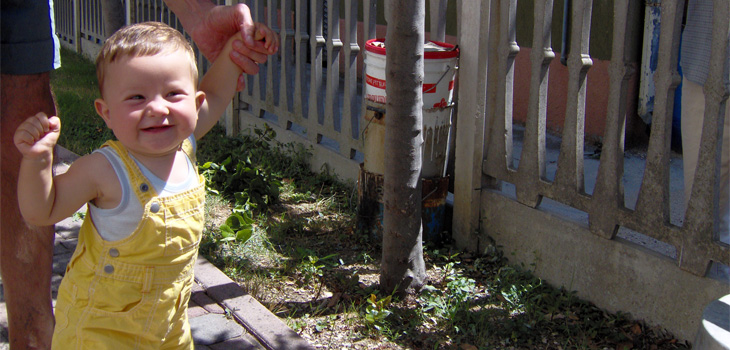
According to a May 23, 2016 news release, a study just published in the Journal of Bone and Mineral Research has demonstrated an “association between children’s abilities in common movements like jumping, running and walking at 18 months and stronger bones as an adolescent. It is thought that these movements in toddlers place a stress on the bones, causing them to react by becoming wider and thicker, thereby making them stronger than those in children who may not be moving as much. Findings from the study may help to identify who is at a greater risk of osteoporosis and bone fractures in later life.”
Toddlers Who Walk Early Have Stronger Bones
2 min read Premium comments
Secondary
“Healthcare scientists from Manchester Metropolitan University and the University of Bristol believe the results could also be partly attributed to children with good early life movement being more physically active as they get older.”
“These children had bigger muscles which previous work by the Bristol group, led by Professor Jon Tobias, has shown to be associated with greater physical activity. In the current study, the researchers demonstrated that around half of the differences in bone strength at 17 years old associated with movement could be explained by muscle size differences. The study found the effect was more pronounced in males than in females, suggesting early movement plays less of a role in female bone strength. This fits with previous studies by the Manchester and Bristol groups showing that effects of physical activity and exercise on bone are greater in males than females.
Lead researcher Alex Ireland, Ph.D. from Manchester Met’s School of Healthcare Science, said: “The findings are intriguing as they provide a link which wasn’t previously understood, primarily that how we move as a young child can have ramifications for our bone strength even 16 years later.”
Dr. Ireland told OTW, “The most interesting part of the study was the opportunity to work on such a large-scale, long-term project. Our studies are usually in quite small groups of up to 100 people and tend to last a few months at most. This study involved thousands of children followed for nearly two decades, which allowed us to see how events in early childhood can affect our health throughout life.”
“In terms of the interest for orthopedic surgeons, hip fractures are a very common and serious injury. A person’s risk of hip fracture is greatly reduced if they have strong bones. This study showed that young adults who had started to walk, run and jump at a younger age had much stronger bones (and so a much lower fracture risk) than children who developed later. So these early movements can have quite serious implications for the health of our skeleton even many years after.”
Author
React:
Discussion
This is a fascinating development. In my practice we've seen similar outcomes with the revised protocol. The key differentiator seems to be patient selection criteria. Has anyone else noticed the correlation with BMI thresholds?
Great point. I'd push back slightly on the conclusion, the sample size in the cited study is too small to draw population-level inferences. That said, the directional signal is compelling and worth a larger RCT.
We implemented a similar approach last year. Early results are promising but we're still gathering 12-month follow-up data. Happy to share our protocol if anyone is interested.
Join the conversation
Orthopedic professionals are discussing this. Sign in and upgrade to read every comment and add your voice.