
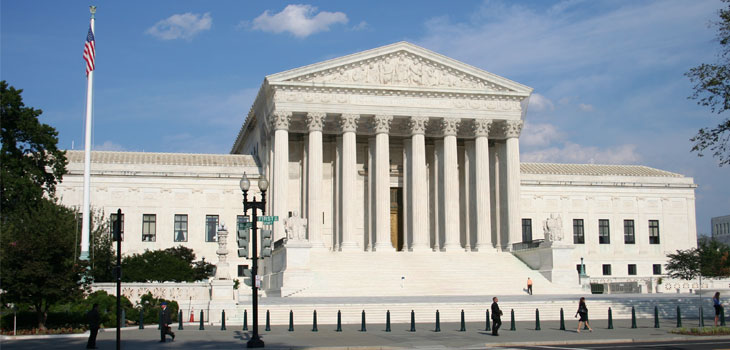
There’s a case (Universal Health Services v Escobar) before the U.S. Supreme Court which may limit the reasons whistleblowers can use to file a False Claims lawsuits.
Supreme Court Considers False Claims Limits
2 min read Premium comments
Secondary
“Implied Certification Theory”
Currently, whistleblowers can file a False Claims lawsuit even when the payment request contains no false information. This is called the “implied certification theory.” The theory holds that if the provider submitting the claim is in violation of some government rule or regulation, even the truthful claim for payment is inherently false.
The Escobars are the parents of a teenage daughter who filed suit after their daughter died in 2009 after having an adverse reaction to anti-seizure medication prescribed at Arbour Counseling Services in Brookline, Massachusetts. Arbour is owned by King of Prussia, Pennsylvania-based Universal Health Services (UHS).
According to the National Law Review, a subsequent investigation revealed Arbour Counseling was not in compliance with several Massachusetts regulations related to licensure and supervision during the time of the teenager’s treatment.
The parents sued, alleging that any claim for payments were false because UHS knew it was not in compliance with state regulations.
At district court, the judge ruled that the state regulations violated by UHS were not “preconditions for payment” and granted UHS’ motion to dismiss the case. The Escobars appealed to the U.S. Court of Appeals for the First Circuit. The appeals court disagreed with the district judge and reversed the decision and sent the case back for a trial.
In December 2015, the Supreme Court agreed to review the case.
Hospitals Seek End of Theory
Hospitals do not like the “implied certification theory” and in January 2016, the American Hospital Association, the Federation of American Hospitals and the Association of American Medical Colleges filed a friend-of-the court brief, asking the Supreme Court to reverse the appellate court decision.
The hospitals argued that False Claims liability “should only attach when a defendant submits a claim that it knows is ineligible for payment because some expressly designated condition for payment of that claim has not been satisfied.”
Lawrence Kraus, partner at the Foley & Lardner law firm, told Becker’s Hospital Review that during oral arguments the Justices appeared frustrated with the technical labels currently used to analyze FCA claims. “Several Justices were skeptical the proper line could be drawn based on basic fraud principles, as urged by the petitioner/defendant, ” said Kraus.
“Overall, faced with the facts of the case, the court seems inclined to uphold the validity of the implied certification theory of liability under the FCA [False Claims Act], ” he said.
The court is likely to issue an opinion in June.
Author
React:
Discussion
This is a fascinating development. In my practice we've seen similar outcomes with the revised protocol. The key differentiator seems to be patient selection criteria. Has anyone else noticed the correlation with BMI thresholds?
Great point. I'd push back slightly on the conclusion, the sample size in the cited study is too small to draw population-level inferences. That said, the directional signal is compelling and worth a larger RCT.
We implemented a similar approach last year. Early results are promising but we're still gathering 12-month follow-up data. Happy to share our protocol if anyone is interested.
Join the conversation
Orthopedic professionals are discussing this. Sign in and upgrade to read every comment and add your voice.