
Safe Orthopaedics has announced that the first surgeries using its new SteriSpineCC range for cervical vertebrae surgeries have been successful.
Safe Orthopaedics: Success With First SteriSpineCC Surgeries
2 min read Premium comments
Secondary
Pierre Dumouchel, interim chief executive officer of Safe Orthopaedics, commented in the May 11, 2016 news release, “The launch of SteriSpineCC represents another milestone in our expansion and in the execution of Safe Orthopaedics’ mission. We want to provide a solution facilitating the treatment of degenerative cervical conditions by delivering the combined benefits of a stable anatomical implant with our single-use instruments. This type of cervical surgery needs to be reliable, effective and rapid so that it can guarantee the best possible clinical outcome. This type of surgery opens the door to fast-track and outpatient surgery.”
Professor Jean-Charles Le Huec, who leads the orthopedics-spine trauma unit at Bordeaux University Hospital, and Dr. Antonio Faundez, a surgeon at Hôpital de la Tour in Switzerland, have performed four SteriSpineCC surgeries.
“This new system is genuinely straightforward and makes the surgery safer by helping to reduce operating times”, commented Professor Le Huec. “In this product I can see and appreciate the benefits of Safe Orthopaedics’ philosophy, which began with the SteriSpine PS and LC lumbar systems.”
Professor Le Huec told OTW, “This new cage proposed by Safe Orthopaedics follows the same philosophy as the others in the portfolio associating an anatomic design cage that can be used stand alone with two screws or in association with a plate according to surgeon’s preference or indication need (trauma/degenerative). Its low profile allows all options. This implant takes the best of all existing on the market.”
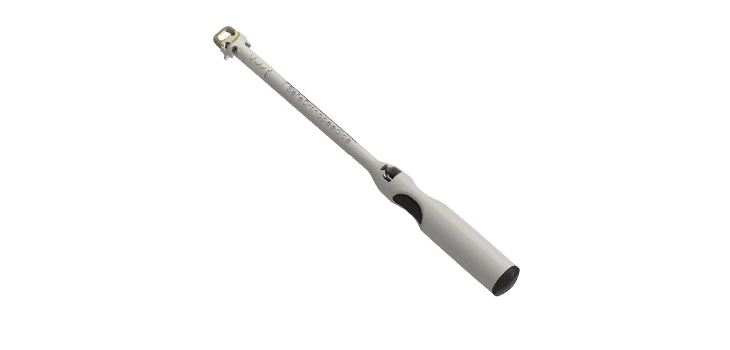
“The great benefit of the single use instrumentation provided is the possibility to have all what is needed for a cervical interbody fusion (anterior cervical discectomy and fusion) ready at any time: for an emergency trauma case, for a cervical disc herniation with neurological deficit etc.…no need to wait for a sterilisation process because the instruments were used for a scheduled case during the day. Easy to set up the OR for the nurses and easy to clean at the end of the procedure, all instruments being recyclable in the regular hospital recyclable circuit. Implants are delivered sterile ready to use and instruments are single use avoiding the long process of cleaning and sterilization and also the quality control of any missing or damaged tool.”
React:
Discussion
This is a fascinating development. In my practice we've seen similar outcomes with the revised protocol. The key differentiator seems to be patient selection criteria. Has anyone else noticed the correlation with BMI thresholds?
Great point. I'd push back slightly on the conclusion, the sample size in the cited study is too small to draw population-level inferences. That said, the directional signal is compelling and worth a larger RCT.
We implemented a similar approach last year. Early results are promising but we're still gathering 12-month follow-up data. Happy to share our protocol if anyone is interested.
Join the conversation
Orthopedic professionals are discussing this. Sign in and upgrade to read every comment and add your voice.