
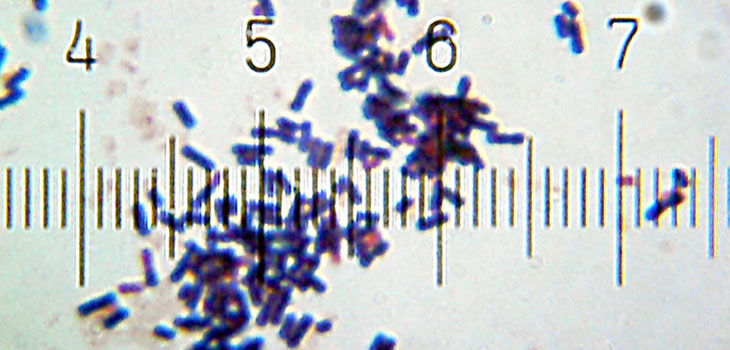
Give a mouse some yogurt and what happens? Well, say researchers from Emory University School of Medicine and Georgia State University, a chain of events occur that protected them from the loss of bone density. Senior author Roberto Pacifici, M.D., worked with colleagues to treat female mice with Lactobacillus rhamnosus GG (LGG), a type of bacteria found in some yogurts, or with a commercially available mix of eight strains of bacteria known as VSL#3. The team found that probiotic supplements protected female mice from the loss of bone density that occurs after having their ovaries removed.
Probiotics Protect From Bone Density Loss
2 min read Premium comments
Secondary
As indicated in the in the April 27, 2016 news release, “Emory and Georgia State researchers found that in mice, the loss of estrogen increases gut permeability, which allows bacterial products to activate immune cells in the intestine. In turn, immune cells release signals that break down bone. Probiotics both tighten up the permeability of the gut and dampen inflammatory signals that drive the immune cells, the team found. A month after ovary removal, mice that were not treated with probiotic bacteria had lost half of their bone density. But the bone density in probiotic-treated mice stayed the same, the researchers observed. The type of bacteria was important; treating mice with a laboratory strain of E. coli bacteria lacking probiotic properties did not help, and a mutant LGG bacteria with a defect in sticking to intestinal cells provided a weakened protective effect. In mice that did not have their ovaries removed, probiotic treatment actually led to an increase in bone density.”
“Our findings highlight the role that intestinal microbes play in modulating gut permeability and inflammation in the context of sex steroid depletion, ” says Dr. Pacifici “We think there are direct implications for the treatment of osteoporosis that should be tested clinically.”
“The scientists also tested the role of gut bacteria in bone loss by studying mice that were raised under germ-free conditions. In this situation, surgical ovary removal is not feasible so the research team used the drug leuprolide, which reduces hormone production by the ovaries. Germ-free mice treated with leuprolide do not have a reduction in bone density.”
“What this means is that the presence of some intestinal bacteria is required for sex steroid depletion-induced bone loss”, says co-author Rheinallt Jones, Ph.D., assistant professor of pediatrics. “We observed increased gut permeability following sex steroid depletion. As a result, it is likely that more particles from intestinal bacteria enter the gut tissue and activate immune cells that are known to cause bone loss.”
Dr. Jones says current investigations are focused on assessing the diversity of the gut microbiome following sex steroid depletion. “One possibility is that sex steroid deficiency leads to decreased microbiota diversity that exacerbate bone loss, and that probiotics preserve greater diversity, ” he stated.
Asked about the most interesting findings, Dr. Pacifici told OTW, “That intestinal microbiota are important regulators of bone in health and disease. Our study shows that the microbiota are required for estrogen deficiency to cause bone loss, while probiotics prevent bone loss in estrogen-deficient mice and exert a bone anabolic activity in mice with intact ovaries. Probiotics may represent an inexpensive means to stimulate bone growth.”
React:
Discussion
This is a fascinating development. In my practice we've seen similar outcomes with the revised protocol. The key differentiator seems to be patient selection criteria. Has anyone else noticed the correlation with BMI thresholds?
Great point. I'd push back slightly on the conclusion, the sample size in the cited study is too small to draw population-level inferences. That said, the directional signal is compelling and worth a larger RCT.
We implemented a similar approach last year. Early results are promising but we're still gathering 12-month follow-up data. Happy to share our protocol if anyone is interested.
Join the conversation
Orthopedic professionals are discussing this. Sign in and upgrade to read every comment and add your voice.