
The sample was small but the results of the study encouraging to sufferers with knee pain. Participants in a study of 30 patients who received a series of three weekly injections of autologous conditioned plasma (ACP) experienced a 78% improvement in their knee pain at 12 months. Patients in the control group, who were injected with a saline solution, experienced a 7% improvement. The study, reported on by Pam Harrison, a contributing writer for MedPage Today, was conducted by the Columbia Orthopaedic Group of Columbia, Missouri.
New Study Lends Supports to PRP for Knee Pain
2 min read Premium comments
Secondary
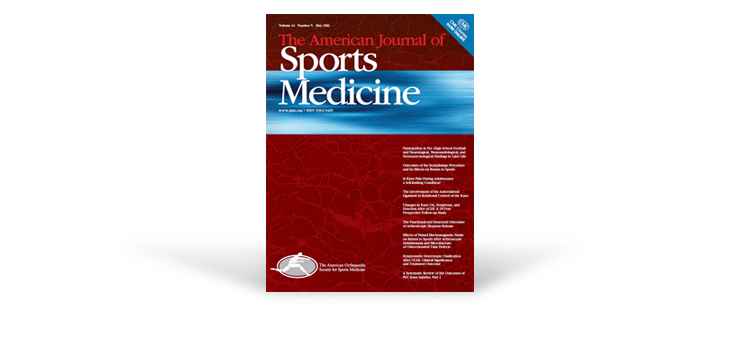
“The primary objective of the current study was to determine the safety of ACP, and the secondary objective was to determine the efficacy of ACP in patients with primary osteoarthritis of the knee, ” Patrick A. Smith, M.D., wrote in the American Journal of Sports Medicine in a report on the study.
He said, “The results confirmed the study’s hypothesis that no differences were present for outcomes related to patient safety, while significant improvements related to efficacy between ACP and placebo groups were present throughout the study duration.”
According to Harrison, the study was sanctioned by the Food and Drug Administration (FDA) and was the first trial specifically to assess the safety and efficacy of intra-articular, platelet-rich plasma (PRP) injections for the treatment of knee OA.
Researchers assigned all of the patient–participants to three treatment visits, one week apart, followed by three follow-up visits. The last follow-up visit took place 12 months after the participants received their first injection.
The investigational group received three intra-articular injections of ACP at 1-week intervals, while the control group received three intra-articular injections of saline on the same schedule.
The test used to measure the participants’ response was the Western Ontario and McMaster Universities Osteoarthritis Index (WOMAC).
Smith reported that, “The lower overall WOMAC scores for the ACP group were statistically different from the WOMAC scores for the placebo group starting at 2 weeks. And a statistically significant decrease in WOMAC scores when compared with baseline was seen in the ACP group starting at 1 week. The decrease remained statistically significant throughout the study duration.”
Harrison quoted Carlos Meheux, M.D., of Houston Methodist Hospital, who told MedPage Today that several level-1 evidence studies have demonstrated that PRP injections do have significant benefit in terms of improving pain and functionality in patients who have received these injections for treatment of OA of the knee.
Author
React:
Discussion
This is a fascinating development. In my practice we've seen similar outcomes with the revised protocol. The key differentiator seems to be patient selection criteria. Has anyone else noticed the correlation with BMI thresholds?
Great point. I'd push back slightly on the conclusion, the sample size in the cited study is too small to draw population-level inferences. That said, the directional signal is compelling and worth a larger RCT.
We implemented a similar approach last year. Early results are promising but we're still gathering 12-month follow-up data. Happy to share our protocol if anyone is interested.
Join the conversation
Orthopedic professionals are discussing this. Sign in and upgrade to read every comment and add your voice.