
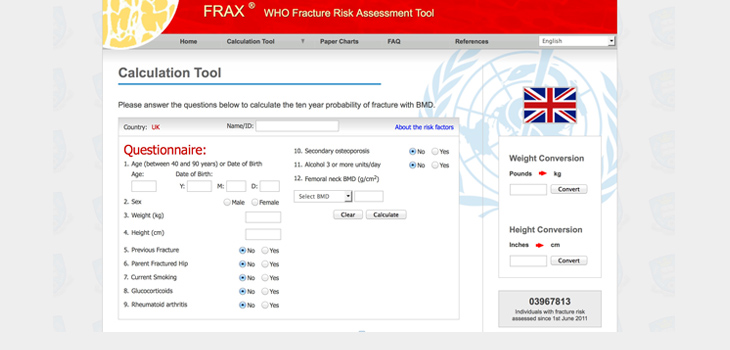
In the most comprehensive study to date, researchers have assessed the efficacy of trabecular bone score (TBS) to predict fracture risk. As indicated in the April 26, 2016 news release, TBS is currently used in conjunction with bone mineral density (BMD) values to enhance the predictive ability of the widely used Fracture Risk Assessment tool (FRAX), a calculator used to assess an individual’s 10-year risk of major osteoporotic fracture.
Largest-Ever Study on Trabecular Bone Score and Fracture
1 min read Premium comments
Secondary
“…a team of international researchers have now validated the predictive ability of TBS using individual-level data of 17, 809 men and women from 14 studies worldwide. They aimed to validate the contribution of TBS to fracture risk prediction, independent of FRAX, and to examine the impact of applying TBS adjustment to FRAX probabilities.”
Co-author Professor John A. Kanis, M.D., Emeritus Professor in Human Metabolism, University of Sheffield, stated, “The findings of this study support the use of TBS, not only as a standalone assessment of fracture risk but also, more importantly, as an independent contributor to a more global risk assessment that could permit its use alongside established risk assessment tools such as FRAX.”
Dr. Kanis told OTW, “The strength of this meta-analysis is that we were able to access individual patient data rather than summary statistics. This poses a challenge in interaction with all the principal investigators who made this type of analysis possible.”
“It is important that orthopaedic surgeons recognise that fragility fractures in the elderly presage future fractures. Indeed, 50% of women with a hip fracture have already had a prior fragility fracture. Orthopaedic surgeons should be aware of this fracture cascade to ensure the appropriate long-term care of osteoporosis and skeletal fragility.”
Author
React:
Discussion
This is a fascinating development. In my practice we've seen similar outcomes with the revised protocol. The key differentiator seems to be patient selection criteria. Has anyone else noticed the correlation with BMI thresholds?
Great point. I'd push back slightly on the conclusion, the sample size in the cited study is too small to draw population-level inferences. That said, the directional signal is compelling and worth a larger RCT.
We implemented a similar approach last year. Early results are promising but we're still gathering 12-month follow-up data. Happy to share our protocol if anyone is interested.
Join the conversation
Orthopedic professionals are discussing this. Sign in and upgrade to read every comment and add your voice.