
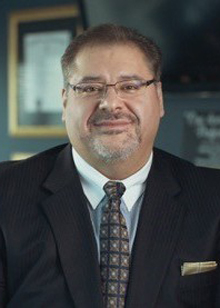
Khaled J. Saleh, M.D., most recently chair of orthopedic surgery and director for clinical and translational research at the Southern Illinois School of Medicine, is the new Executive in Chief of DMC Orthopaedics and Sports Medicine Service Line at the Detroit Medical Center (DMC).
Khaled J. Saleh, M.D. Executive in Chief of Ortho at Detroit Medical Center
2 min read Premium comments
“DMC is fortunate to have attracted Dr. Saleh, who was recently ranked number 20 among 21, 000 joint surgeons globally, and was named the Sangamon Medical Society Innovator of the Year by his colleagues, ” said Joe Mullany, Detroit Medical Center CEO in the May 3, 2016 news release. “He’s undoubtedly a brilliant leader in his field and an exceptional addition to our team.”
“In his role, Dr. Saleh will provide leadership for academic and clinical activities, and work collaboratively with other disciplines to advance the orthopaedic and sports medicine service line toward national and international prominence, ” said Karen Fordham, CEO of Huron Valley-Sinai Hospital and Regional Service Line Leader, DMC Orthopaedics and Sports Medicine. “This is a rapidly growing service line. The need is great and DMC intends to be the leader in filling that need in this region and beyond.”
“Dr. Saleh obtained his undergraduate and medical education at the University of Western Ontario in Canada. After completing his orthopaedic residency at the University of Toronto, he completed two fellowships in joint replacement: one at Mt. Sinai Hospital in Toronto and the other at the prestigious Hospital for Special Surgery at Cornell Medical College in New York City. Dr. Saleh then completed three master’s degrees—in public health at the esteemed Centre for Health Economics, in policy analysis at McMaster University in Hamilton, Ontario, and in health care management at Harvard University.”
Asked about what he will do first in this new position, Dr. Saleh told OTW, “The most important thing to do first is to listen. Listen to the extremely knowledgeable DMC experts and orthopedic team members who have already done much of the work to make DMC a national leader. I also need to talk with our many partners, including primary care physicians who refer patients to us, our academic partners, allied health professionals who work with us, insurance providers, and key members of the communities we serve. From these discussions, we will be able to put together a shared vision on how to make DMC the preeminent orthopedics and sports medicine program. Then it just becomes a matter of executing the steps in order to achieve this vision.”
“I look forward to coming to DMC, and to southeast Michigan. I grew up, earned my medical degree and completed my training just a few hours from the Detroit area, in Canada. Along with my family, I have spent a great deal of time in Michigan and in the Detroit area, and am excited about returning to a community in which I have so many great memories.”
React:
Discussion
This is a fascinating development. In my practice we've seen similar outcomes with the revised protocol. The key differentiator seems to be patient selection criteria. Has anyone else noticed the correlation with BMI thresholds?
Great point. I'd push back slightly on the conclusion, the sample size in the cited study is too small to draw population-level inferences. That said, the directional signal is compelling and worth a larger RCT.
We implemented a similar approach last year. Early results are promising but we're still gathering 12-month follow-up data. Happy to share our protocol if anyone is interested.
Join the conversation
Orthopedic professionals are discussing this. Sign in and upgrade to read every comment and add your voice.