
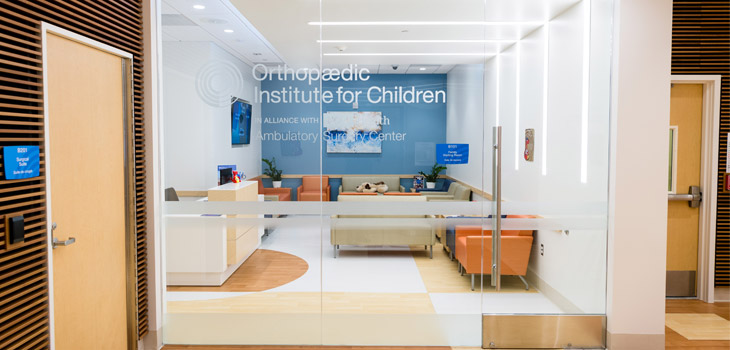
On April 25, 2016, there was a unique ribbon-cutting event in Los Angeles. Mayor Eric Garcetti and many others were on site to mark the opening of Los Angeles’ first ambulatory surgery center (ASC) for children. According to the April 27, 2016 media alert, The Orthopaedic Institute for Children was “designed and built exclusively to provide orthopaedic surgical care to children. The new center will reduce orthopaedic surgery wait times for children while greatly enhancing quality outcomes and enriching the patient experience for children and their parents. The Center will include:
First-in-L.A.: Ambulatory Surgery Center for Children
1 min read Premium comments
Secondary
- Physicians and other professionals specially trained to address the distinct needs of children
- 13, 000 square feet of specially designed space
- Two expansive operating rooms
- Six pre- and post-surgical suites”
Asked what was challenging about making this happen, Matthew Niedzwiecki, Chief Operating Officer of the Orthopaedic Institute for Children, told OTW, “The fact that we built out the lower level made the project challenging. The access to the construction area was not ideal and we had to work around the existing infrastructure for the entire building. There really were not any other challenges. Every vendor involved has said over and over that this was one of the smoothest projects they’ve ever worked on.”
As for what will be the indicators that things are going well a year from now, he commented, “Second operating room open or preparing to be open, clinical and business metrics being met. We will begin by using one OR, and use the second one as case volume ramps up.”
“Our surgical volume goal is 800 cases per year. We want to have 95% of our OR surgery starts be on schedule with turnover times 15 minutes or less. We also aim to maintain the hand hygiene compliance to a rate of 100%.”
React:
Discussion
This is a fascinating development. In my practice we've seen similar outcomes with the revised protocol. The key differentiator seems to be patient selection criteria. Has anyone else noticed the correlation with BMI thresholds?
Great point. I'd push back slightly on the conclusion, the sample size in the cited study is too small to draw population-level inferences. That said, the directional signal is compelling and worth a larger RCT.
We implemented a similar approach last year. Early results are promising but we're still gathering 12-month follow-up data. Happy to share our protocol if anyone is interested.
Join the conversation
Orthopedic professionals are discussing this. Sign in and upgrade to read every comment and add your voice.