
As one who enjoys watching NFL football on television (and therefore shares culpability with other fans) I am reporting on a study of 40 former NFL football players who underwent diffusion MRI scans to check for mental impairment.
Brain Injury Problem in NFL Deepens
2 min read Premium comments
Secondary
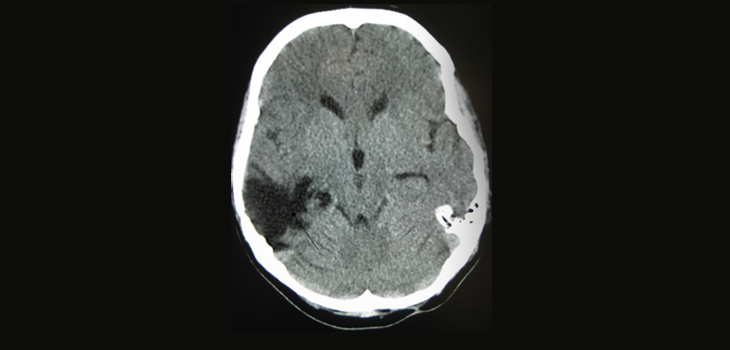
Francis Conidi, M.D., D.O., head of the Florida Center for Headache and Sports Neurology in Port St. Lucie and a faculty member at Florida State University in Tallahassee conducted the tests and diagnosed 17 of those players, 43%, with traumatic brain injury.
According to Ed Susman, who reported on the study for MedPage Today, those 17 players had levels of water movement on their MRIs that was 2.5 standard deviations below those of healthy people of the same age. (The players’ average age was 36.) That is considered evidence of traumatic brain injury. The scans measured the amount of damage to the brain’s white matter, which connects different brain regions, based on the movement of water molecules in the brain tissue.
“This is one of the largest studies to date in living retired NFL players and one of the first to demonstrate significant objective evidence for traumatic brain injury in these former players. The rate of traumatic brain injury was significantly higher in the players than that found in the general population, ” Conidi said.
Susman quoted A. Gordon Smith, M.D., professor and vice chair of research and chief of neuromuscular medicine at the University of Utah School of Medicine at Salt Lake City, who told MedPage Today, “This study is highly relevant to players in the National Football League from their personal health perspective but I think it has implications for broader public health in terms of sporting settings, youth sports and otherwise and also the larger landscape of brain injury.
“It is important to recognize how chronic traumatic encephalopathy and concussion intersect with the larger issue of neurodegenerative disease and Alzheimer’s disease and so forth. It is very important from the public health perspective and also from our larger efforts to understand brain disease.”
For the study, Conidi and his colleagues conducted thinking and memory tests on the 40 retired players. Most of them had been out of the NFL for less than five years, had played for an average of seven years in the NFL, and reported an average of 8.1 concussions.
On the tests of thinking skills, about 50% had significant problems on executive function, 45% on learning or memory, 42% on attention and concentration, and 24% on spatial and perceptual function. The more years a player spent in the NFL, the more likely he was to have the signs of traumatic brain injury on the diffusion tensor MRI, Conidi said.
Author
React:
Discussion
This is a fascinating development. In my practice we've seen similar outcomes with the revised protocol. The key differentiator seems to be patient selection criteria. Has anyone else noticed the correlation with BMI thresholds?
Great point. I'd push back slightly on the conclusion, the sample size in the cited study is too small to draw population-level inferences. That said, the directional signal is compelling and worth a larger RCT.
We implemented a similar approach last year. Early results are promising but we're still gathering 12-month follow-up data. Happy to share our protocol if anyone is interested.
Join the conversation
Orthopedic professionals are discussing this. Sign in and upgrade to read every comment and add your voice.