
The problem of blood loss in combat is so severe that the U.S. Special Operations Command (SOCOM) has granted researchers from Australia’s James Cook University (JCU) $532, 349 to make headway on this issue.
U.S. Military Grants $532, 349 for “Pharmacological Tourniquet”
2 min read Premium comments
Secondary
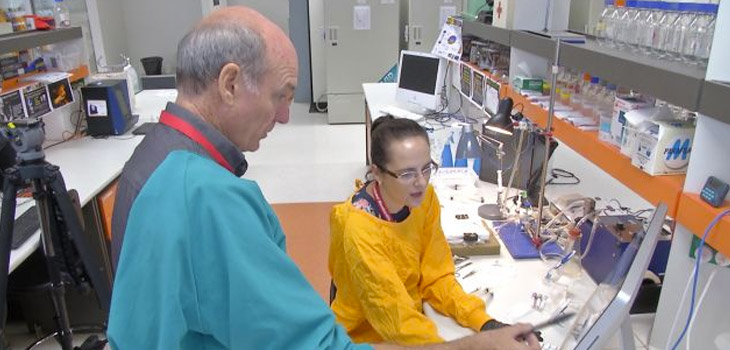
Professors Geoffrey Dobson and Hayley Letson of the College of Medicine & Dentistry, and the Australian Institute of Health and Tropical Medicine (AITHM) have found, according to the April 14, 2016 news release, a “potentially revolutionary drug therapy that treats shock and acts like a ‘pharmacological tourniquet’ by dramatically reducing internal blood loss by up to 60%, which has the potential to save countless lives.The stabilisation fluid, consisting of adenosine, lidocaine and magnesium, is known as ALM. The JCU team have shown a single small IV bolus of ALM over 60 minutes followed by a 4 hour stabilisation ‘drip’ resulted in a 60% reduction of internal blood loss and increased survival.”
“The ALM fluid is administered intravenously and circulates around the body, kick-starts the heart, gently raises blood pressure, protects the heart, brain and organs, and slows bleeding by plugging up the leaks, ” Dr. Dobson said. “It is not a foam or synthetic compound like that those used to plug a flat tyre, it is a therapeutic drug that protects the body and stops the blood from thinning, allowing it to rapidly form a viable clot and reduce bleeding.”
“The uniqueness of our ALM fluid is its small volume and ability to protect the whole body at the point-of-injury, as part of a knife-edge balancing act between life and death, ” Dr. Dobson said.
“It resuscitates the body after hemorrhagic shock, plugs the holes, reduces inflammation, protects the vital organs, including the brain, and reduces infection. It is all about providing the combat medic with a new way to buy time on the battlefield, ” he said.
Dr. Dobson told OTW, “Our idea is different than most and focuses more on the patient’s response to trauma, than on the ‘trauma stressor’ itself, which may explain why the IV therapy confers such widespread protection against hemorrhagic shock, cardiac arrest, regional myocardial ischemia, arrhythmias, endotoxemia and infection. It may find utility in orthopaedic surgery and other major surgeries worldwide.”
“Reducing blood loss and preventing an overexpression of inflammation are key targets to promoting rapid healing, reducing adhesions and reducing other complications after shoulder or knee surgery. We are working with orthopaedic surgeon Dr. Peter McEwen, and the team at Orthopaedic Research Institute of Queensland (The ORIQL) as part of translation into orthopaedic surgery.”
React:
Discussion
This is a fascinating development. In my practice we've seen similar outcomes with the revised protocol. The key differentiator seems to be patient selection criteria. Has anyone else noticed the correlation with BMI thresholds?
Great point. I'd push back slightly on the conclusion, the sample size in the cited study is too small to draw population-level inferences. That said, the directional signal is compelling and worth a larger RCT.
We implemented a similar approach last year. Early results are promising but we're still gathering 12-month follow-up data. Happy to share our protocol if anyone is interested.
Join the conversation
Orthopedic professionals are discussing this. Sign in and upgrade to read every comment and add your voice.