
Talk about a body-mind connection! Researchers from The Ohio State University Wexner Medical Center have found that patients dealing with chronic pain can reduce their emotional response to the pain through spinal cord stimulation. The results are published in the latest issue of the journal Neuromodulation: Technology at the Neural Interface.
Spinal Cord Stimulation Reduces Emotional Response to Pain
2 min read Premium comments
Secondary
“Our initial study provides insights into the role of the brain’s emotional networks in relieving chronic pain. We are the first to show that therapeutic spinal cord stimulation can reduce the emotional connectivity and processing in certain areas of the brain in those with chronic pain, ” said principal investigator Ali Rezai, M.D., director of the Center for Neuromodulation, in the March 17, 2016 news release. “Being able to modulate the connections between the brain areas involved in emotions and those linked to sensations may be an important mechanism involved in pain relief linked to spinal cord stimulation.”
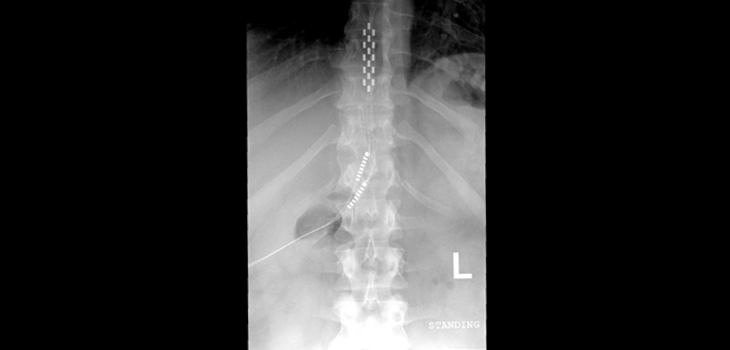
According to the news release, “Researchers at Ohio State’s Neurological Institute studied 10 patients who were living with severe chronic leg pain who were implanted with a spinal cord stimulator to reduce their pain. This research builds off previous findings that proposed the concept of the neuromatrix theory of pain, in which pain perception varies according to cognitive, emotional and sensory influences.”
“The default mode network (DMN) is the resting state network of the brain and plays a key role in the cognitive and emotional aspects of pain perception. It’s also associated with functional connectivity hubs and brain networks. The resting DMN is abnormal in patients with chronic painful conditions, implicating the impact of such chronic conditions on areas beyond pain perception.”
“By using functional magnetic resonance imaging (fMRI), we mapped the areas of the brain involved in pain perception and modulation. If we can understand neural networks implicated in the pathophysiology of pain, then we can develop new therapies to manage chronic persistent pain, ” said first author Dr. Milind Deogaonkar, an Ohio State neurosurgeon who specializes in neuromodulation.
Dr. Rezai told OTW, “More than 500, 000 patients have had spinal cord stimulators (SCS) implants for chronic pain. SCS is safe and effective for pain control for severe chronic pain of the extremities and other conditions. However, the mechanisms of action of SCS are still not well understood and this is an area of active investigation. Our team’s goal was to utilize functional MRI with SCS to evaluate changes in the brain networks and circuitry involved in pain perception including sensory, emotion, behavioral and cognitive regions.”
Asked what he found most interesting, Dr. Rezai stated, “SCS linked pain control is associated with modulation of brain’s emotional and behavioral circuitry and networks, demonstrating the role of these regions in the perception and control of pain.”
Author
React:
Discussion
This is a fascinating development. In my practice we've seen similar outcomes with the revised protocol. The key differentiator seems to be patient selection criteria. Has anyone else noticed the correlation with BMI thresholds?
Great point. I'd push back slightly on the conclusion, the sample size in the cited study is too small to draw population-level inferences. That said, the directional signal is compelling and worth a larger RCT.
We implemented a similar approach last year. Early results are promising but we're still gathering 12-month follow-up data. Happy to share our protocol if anyone is interested.
Join the conversation
Orthopedic professionals are discussing this. Sign in and upgrade to read every comment and add your voice.