
With summer nearly upon us, Chicago is on top of the national skateboarding safety issue. Communities are joining forces with Midwest Orthopaedics at Rush (MOR) to promote the Skate Safe initiative (www.skatesafer.org).
Rush and Local Community Tackling Skateboard Safety
1 min read Premium comments
Secondary
The April 21, 2016 news release notes that, “According to the Consumer Product Safety Commission, there was a 23 percent jump in reported skateboard injuries for kids younger than age 15 between 2013 and 2015. (figures for 2016 not out yet) Experts agree that injuries have increased with the skyrocketing popularity of skateboarding, which is often referred to as the ‘No. 1 Extreme Sport’ in the U.S.”
“While we are concerned about all injuries, especially concussions, we typically see a large number of finger, wrist, forearm and elbow fractures, ” said Robert Wysocki, M.D. of the MOR Hand, Wrist & Elbow Institute. “And, it’s a shame because many of these are preventable.”
Asked what kind of skateboarding injuries he sees, Dr. Wysocki told OTW, “Wrist fractures (including distal radius and scaphoid), elbow fractures and dislocations, finger fractures.”
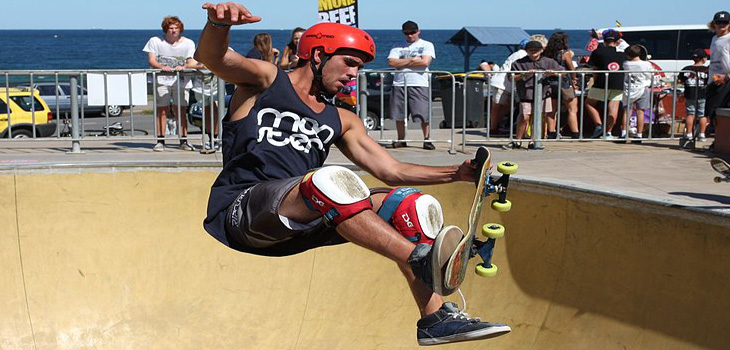
As for what safety precautions skateboarders are likely to ignore, he noted, “Gear, including helmets, wrist guards, elbow pads, and knee pads. Patients should know their limits and not push themselves to do tricks, or use skatepark props (rails, etc.) that are above one’s level. They should also select the appropriate terrain. If you are going to do tricks on things like walls and rails, it is best of they are at a sanctioned skatepark that has regular maintenance to assure the terrain is in good condition.”
Author
React:
Discussion
This is a fascinating development. In my practice we've seen similar outcomes with the revised protocol. The key differentiator seems to be patient selection criteria. Has anyone else noticed the correlation with BMI thresholds?
Great point. I'd push back slightly on the conclusion, the sample size in the cited study is too small to draw population-level inferences. That said, the directional signal is compelling and worth a larger RCT.
We implemented a similar approach last year. Early results are promising but we're still gathering 12-month follow-up data. Happy to share our protocol if anyone is interested.
Join the conversation
Orthopedic professionals are discussing this. Sign in and upgrade to read every comment and add your voice.