
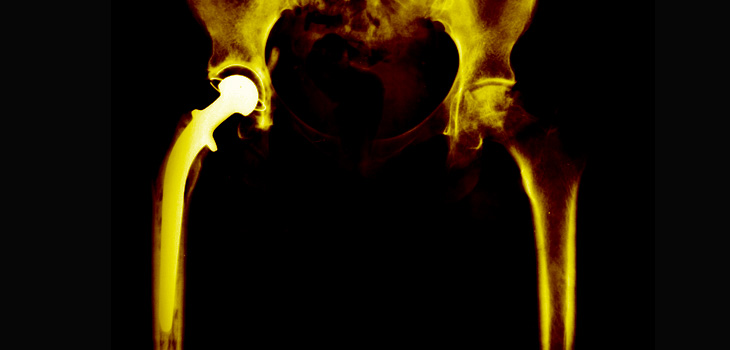
Exactly what kind of patient converts from a hip arthroscopy to a total hip arthroplasty (THA)? A team from Hospital for Special Surgery (HSS) wanted to find out. Using California and Florida databases that included 100% of patient visits, the researchers identified 7, 351 patients who underwent hip arthroscopy with two-years follow-up.
Older, Arthritic, Obese Patients More Likely to Convert to THA
1 min read Premium comments
Secondary
William Schairer, M.D., a third year orthopedic surgery resident at HSS, told OTW, “Hip arthroscopy has become an increasingly popular way of treating many types of problems in the hip. In addition to pain relief, the long-term hope is joint preservation, and thus to reduce the risk of needing a hip replacement in the future. Since hip arthroscopy is relatively new, long-term data does not yet exist. However, as a relatively new and increasingly popular procedure, we wanted to look at how hip arthroscopy was being used, and what types of patients might be good candidates for the procedure.”
“We found that patients who are older, have arthritis, or are obese, are more likely to have a hip replacement within a few years of hip arthroscopy. While many patients with these risk factors may still receive some benefit, there are some that will eventually undergo a hip replacement. This is important information for patients and surgeons to know in order to have a real discussion about expectations of surgery, and what types of treatments are available to treat their hip pain.”
React:
Discussion
This is a fascinating development. In my practice we've seen similar outcomes with the revised protocol. The key differentiator seems to be patient selection criteria. Has anyone else noticed the correlation with BMI thresholds?
Great point. I'd push back slightly on the conclusion, the sample size in the cited study is too small to draw population-level inferences. That said, the directional signal is compelling and worth a larger RCT.
We implemented a similar approach last year. Early results are promising but we're still gathering 12-month follow-up data. Happy to share our protocol if anyone is interested.
Join the conversation
Orthopedic professionals are discussing this. Sign in and upgrade to read every comment and add your voice.