
Before children with cerebral palsy undergo difficult surgeries it would be good to know if they might actually benefit from these procedures. To that end, researchers from the University of Washington’s (UW) Department of Mechanical Engineering and Gillette Children’s Specialty Healthcare have developed a new assessment of motor control called Walk-DMC.
New Assessment for Cerebral Palsy Patients
2 min read Premium comments
Secondary
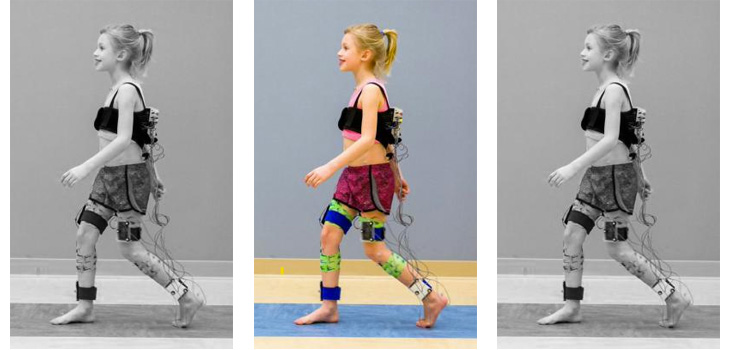
According to the April 27, 2016 news release, “The new measure is based on electromyography (EMG) data, a tool already commonly used to evaluate patients with cerebral palsy that uses electrodes placed on the skin to monitor muscle activity. Historically, doctors have relied on experience and more subjective clinical measures to evaluate a patient’s motor control. In one of the largest studies of treatment outcomes in cerebral palsy to date, the team found that a patient’s Walk-DMC score before treatment was significantly linked with how much the patient’s gait, walking speed and function improved after surgery.”
“In the current study of 473 children with cerebral palsy who had undergone surgical treatment, the researchers found that children with higher Walk-DMC scores prior to surgery had better treatment outcomes—even after controlling for other factors like age and prior treatment.”
“Only about 50% of children have significant improvement in their movement after these highly invasive surgeries, ” said Kat Steele, Ph.D., a UW assistant professor of mechanical engineering. “Our motivation has really been to figure out how we can push up these success rates.”
Dr. Steele told OTW, “Current outcomes after orthopaedic surgery are highly variable in children with cerebral palsy and clinicians struggle to determine the optimal treatment for each individual. Clinicians had hypothesized that an individual’s motor control influences surgical outcomes, but quantifying patient-specific differences in motor control is challenging. This work used the theory of muscle synergies from neuroscience as a tool to quantify changes in motor control in cerebral palsy.”
“We have demonstrated that muscle synergies are altered in children with cerebral palsy and associated with changes in gait and function after surgery. Children with more normal control (a Walk-DMC more similar to typically developing peers) were more likely to have improvements in gait after surgery. Walk-DMC can be calculated from electromyography data which is already collected as standard of care in many clinical motion analysis laboratories.”
Author
React:
Discussion
This is a fascinating development. In my practice we've seen similar outcomes with the revised protocol. The key differentiator seems to be patient selection criteria. Has anyone else noticed the correlation with BMI thresholds?
Great point. I'd push back slightly on the conclusion, the sample size in the cited study is too small to draw population-level inferences. That said, the directional signal is compelling and worth a larger RCT.
We implemented a similar approach last year. Early results are promising but we're still gathering 12-month follow-up data. Happy to share our protocol if anyone is interested.
Join the conversation
Orthopedic professionals are discussing this. Sign in and upgrade to read every comment and add your voice.