
Leo de Souza, M.D., was an orthopedic surgeon who never forgot where he came from. Dr. de Souza, who passed away on March 22, 2016, was born in Tanzania and went on to survive—and then escape—life under the Ugandan regime of Idi Amin. Dr. de Souza, who was retired from Hennepin County Medical Center (HCMC) and the University of Minnesota, was 89 years old.
In Memoriam: Leo de Souza, M.D.
2 min read Premium comments
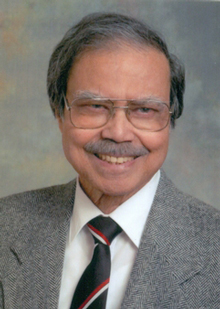
Remembrances
He is survived by his wife of 62 years, Dolly, four children, Louella Anderson (Eric), Mario De Souza (Christine), Lea De Souza and Joanna De Souza, nine grandchildren, Drew, Nicholas (Gretchen) and Matthew (Lindsay) Anderson, Shirin and Luke De Souza, Olivia and Noah Speeter, Billy and Michael Huffman, two great-grandchildren, Julia and Levi, a sister, Magda Gomes, and many loving nieces and nephews.
A funeral service was provided by Gearty-Delmore Funeral Chapel.
Dr. de Souza received his medical training in India and Great Britain, and in 1961 was made a fellow of the Royal College of Surgeons, Edinburgh. After the military coup in Uganda Dr. de Souza and his family fled to Minnesota in 1971. He went to Toronto for re-certification, where he was made a Fellow of the Royal College of Surgeons of Canada. In November 2013, HCMC presented him with the Lifetime Achievement Award.
In his 70s, Dr. de Souza studied creative writing at Hamline University, earning Best Non-Fiction of the Year Award for 2002.
Richard Kyle, M.D., a past president of the American Academy of Orthopaedic Surgeons, did his residency under Dr. de Souza years ago. He says, “Leo was known for taking care of the less fortunate. Several years back he approached me and asked if I could operate on a Ugandan priest. I immediately agreed and now that priest is back in Africa ministering to people who don’t have many resources.”
“He did a lot of important clinical research in spine and foot and ankle. But I think his most significant contribution was the thousands of lectures he did for other physicians. He was named teacher of the year by residents and went to extraordinary lengths to continue helping students learn. When he was too ill to get out of bed he phoned me and asked if he could teach residents and fellows via Skype. And that was just fine with me.”
React:
Discussion
This is a fascinating development. In my practice we've seen similar outcomes with the revised protocol. The key differentiator seems to be patient selection criteria. Has anyone else noticed the correlation with BMI thresholds?
Great point. I'd push back slightly on the conclusion, the sample size in the cited study is too small to draw population-level inferences. That said, the directional signal is compelling and worth a larger RCT.
We implemented a similar approach last year. Early results are promising but we're still gathering 12-month follow-up data. Happy to share our protocol if anyone is interested.
Join the conversation
Orthopedic professionals are discussing this. Sign in and upgrade to read every comment and add your voice.