
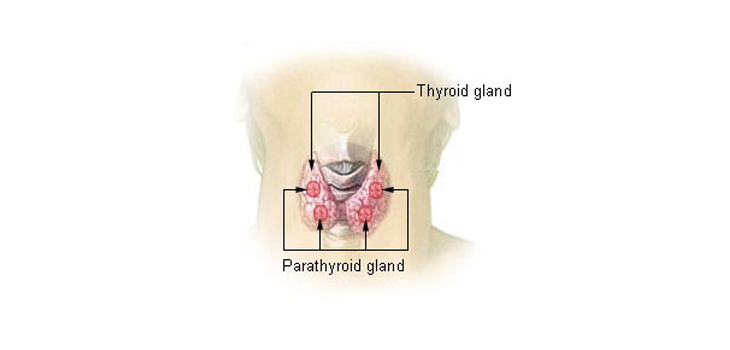
Patients with hyperparathyroidism are often treated with bisphosphonates in an effort to bolster weakening bones. New work from the University of California (UCLA), Los Angeles, however, has found that those drugs increase the risk of fracture. And, according to the April 4, 2016 news release, the study shows that patients who have surgery to remove the overactive parathyroid glands have fewer subsequent bone fractures. The researchers analyzed data from more than 6, 000 patients with hyperparathyroidism.
Hyperparathyroidism Patients: Beware of Bisphosphonates
2 min read Premium comments
Secondary
“Hip fractures in particular are associated with significant rates of mortality, disability and loss of independence, ” said Michael Yeh, M.D., lead researcher and chief of endocrine surgery at the UCLA David Geffen School of Medicine. “Before this study, there was no data that compared parathyroid surgery with prescribing medication on the risk for fractures in people with hyperparathyroidism.”
According to the news release, “Among study participants who were not treated for hyperparathyroidism, there were 56 hip fractures per 1, 000 people after 10 years. Among those who had parathyroid surgery, there were just 20 fractures per 1, 000 people. For those taking bisphosphonate medications, the rate of hip fractures was 86 per 1, 000 patients—higher than the combined rate for those who underwent surgery or did nothing at all. The researchers also reviewed the number of bone fractures of all types (including hip fractures), and the results were similar: For people who did not receive treatment, there were 206 fractures per 1, 000; for those who had surgery, 157 fractures per 1, 000; and for those taking bisphosphonate medications, 303 fractures per 1, 000.”
“Researchers also found that the risk for fractures among people taking bisphosphonates was higher whether people had osteopenia, or early bone loss, or full-blown osteoporosis, which Yeh said could suggest that either the drugs themselves are harmful or that the people taking them had other risk factors.”
Dr. Yeh told OTW, “Primary hyperparathyroidism is a common disease in post-menopausal women, and it frequently leads to osteoporosis with associated increased fracture risk. If an orthopedic surgeon treats a patient with incident fracture or sees a patient with osteoporosis, they can check for primary hyperparathyroidism by checking the blood calcium level as a first step. In patients with primary hyperparathyroidism, parathyroid surgery is the preferred treatment. Orthopedic surgeons should be cautious about performing elective operations on patients with known or suspected primary hyperparathyroidism, as this disease adversely affects bone mineralization.”
“It has been known that primary hyperparathyroidism decreases bone mineral density (BMD). However, BMD is only a highly imperfect surrogate marker of fracture risk. So we wanted to look at fracture risk, i.e., a hard clinical endpoint—fractures are what patients and doctors really care about. The problem is that fractures are relatively rare events. So we needed to find a large group of patients and follow them for a long time in order to get an answer to the question. Our findings quite clearly show that parathyroid surgery is associated with reduced fracture risk, which was very exciting.”
React:
Discussion
This is a fascinating development. In my practice we've seen similar outcomes with the revised protocol. The key differentiator seems to be patient selection criteria. Has anyone else noticed the correlation with BMI thresholds?
Great point. I'd push back slightly on the conclusion, the sample size in the cited study is too small to draw population-level inferences. That said, the directional signal is compelling and worth a larger RCT.
We implemented a similar approach last year. Early results are promising but we're still gathering 12-month follow-up data. Happy to share our protocol if anyone is interested.
Join the conversation
Orthopedic professionals are discussing this. Sign in and upgrade to read every comment and add your voice.