
A very specific amphibian just may—one day—prevent infections. Researchers from the University of Strathclyde in Glasgow, Scotland, have found that the foam made by Trinidadian Tungara frogs represents a new, non-toxic antibiotic delivery system that may help to prevent infections.
Frogs Prevent Infection?!
2 min read Premium comments
Secondary
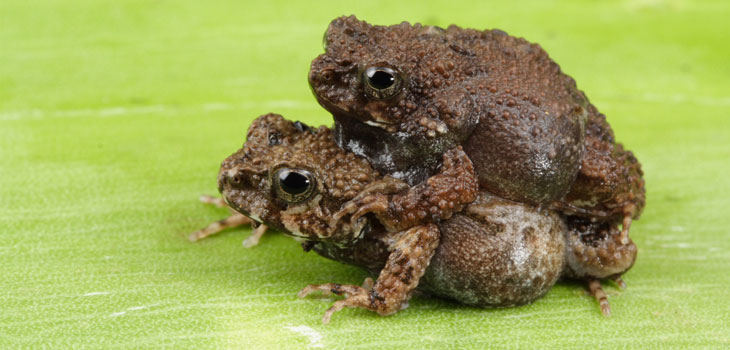
Apparently, in what is quite the energetic mating experience, the Tungara frogs release a protein cocktail that they beat into a foam with their back legs. The frogs, says the March 22, 2016 news release, lay their eggs in these foam nests to protect them from disease, predators and environmental stresses.
The foam appears to be “highly stable and capable of taking up drugs before releasing them at a stable rate. The group’s work reveals that the foam can release model dyes at a steady rate over a period of 72-168 hours, while foam loaded with the antibiotic vancomycin was shown to prevent in vitro growth of the pathogenic bacterium Staphylococcus aureus for a period of 48 hours. The foam proteins were tested in vitro against keratinocytes, a type of skin cell, for 24 hours. These cells were still alive and viable after 24 hours of exposure, demonstrating that the foam is not toxic to human cells.”
The team has engineered “E. coli bacteria to produce two of the foam’s protein constituents, including Ranaspumin-2, which on its own produces a short-lived foam that is also non-toxic to human cells. The researchers are working to produce a completely synthetic form of the foam that is as stable as the frog-produced version.”
Dr. Paul Hoskisson, who leads the research team, said, “Foams are unusual in nature and are typically made of inactivated proteins, yet this foam is stable and importantly compatible with human cells, making it potentially ideal for pharmaceutical applications. While foams like these are a long way from hitting the clinic, they could help in burns and wound treatment, providing support and protection for healing tissue and delivering drugs at the same time—all from a humble little frog.”
Dr. Hoskisson told OTW, “We were interested in the intrinsic properties of the foams, as stable foams are pretty rare in biology and usually foaming is associated with denatured, non-functional proteins. These frog foam proteins have evolved to be stable and to protect the eggs from desiccation and predation over many days in tropical environments, so we were interested in the physical properties of the foams and how they help the frog eggs and tadpoles survive. Whilst talking with a colleague, who works in drug delivery, he remarked that the Atomic Force Microscopy images we had looked similar to some of the foams used in drug delivery…serendipity in science strikes again.”
“It was surprising to find that the foams are able to exchange chemicals within the bubbles with the external environment in a reproducible and dose responsive manner.”
“These foams are a long way from reaching the clinic, but as they are protein based they have no toxicity to mammalian cells that we have been able to observe. Amphibians are very sensitive to environmental damage, so it is no surprise that these foam proteins are highly bio-compatible.”
Author
React:
Discussion
This is a fascinating development. In my practice we've seen similar outcomes with the revised protocol. The key differentiator seems to be patient selection criteria. Has anyone else noticed the correlation with BMI thresholds?
Great point. I'd push back slightly on the conclusion, the sample size in the cited study is too small to draw population-level inferences. That said, the directional signal is compelling and worth a larger RCT.
We implemented a similar approach last year. Early results are promising but we're still gathering 12-month follow-up data. Happy to share our protocol if anyone is interested.
Join the conversation
Orthopedic professionals are discussing this. Sign in and upgrade to read every comment and add your voice.