
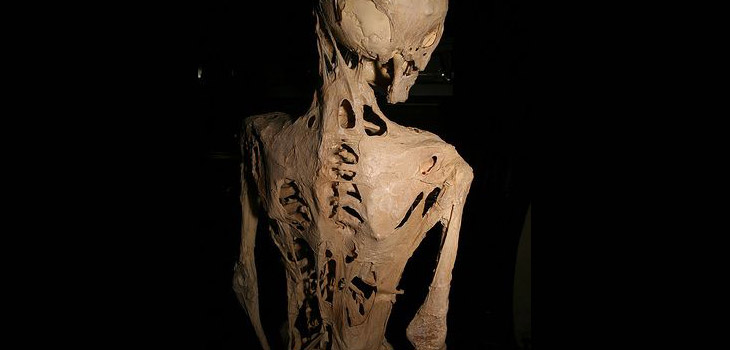
Renown and dedicated researchers have made new progress in their attempts to help those with the extremely rare condition known as fibrodysplasia ossificans progressiva (FOP). New work in a mouse model from The Children’s Hospital of Philadelphia indicates that the drug palovarotene may prevent skeletal problems caused by FOP…and may, may be used in newborn babies with the condition.
Drug May Aid With Rare Bone Disease
2 min read Premium comments
Secondary
According to the April 13, 2016 news release, “In humans with FOP, an activating mutation in the ACVR1 gene triggers extraskeletal cartilage and bone formation and accumulation starting in early childhood. The extraskeletal bone occurs in muscles and other tissues where it does not belong. This pathological process, collectively called heterotopic ossification (HO), causes progressive loss of skeletal motion and hampers breathing and swallowing. Currently untreatable and painful, FOP often causes death early in adulthood.”
“This work represents a big step toward therapy, ” said co-study leader, Maurizio Pacifici, Ph.D., a developmental biologist and director of Orthopedic Research in the Division of Orthopedic Surgery at The Children’s Hospital of Philadelphia (CHOP). “The mice used in this study were engineered to carry the human mutation that causes FOP, and the drug showed powerful and comprehensive benefits for skeletal growth and function in addition to inhibiting HO. If these results translate to humans, we may be able to treat children with FOP early in life, before the disease progresses.”
Eileen M. Shore, Ph.D., a professor in Genetics and Orthopaedics at the Center for Research in FOP and Related Disorders in the Perelman School of Medicine at the University of Pennsylvania, was a co-study leader. Masahiro Iwamoto, D.D.S., Ph.D., also of CHOP, was a co-study leader as well.
As indicated in the news release, “…Iwamoto and Pacifici showed in 2011 that palovarotene inhibited HO in mouse models of genetic HO and injury-induced HO. The Department of Defense supported this research, given that injury-induced HO is prevalent in severely wounded soldiers.”
“The current study extended that research by using palovarotene in a novel mouse model carrying the human mutation, ACVR1 R206H, that causes most cases of FOP. The drug had potent effects—it prevented HO, and also preserved limb motion and normal bone growth in young mutant mice. The benefits for growth were a welcome surprise, said Pacifici, because palovarotene and similar retinoid agonists can impair skeletal growth—a side effect seen in control mice.”
Another co-author from Penn Medicine, Frederick S. Kaplan, M.D., is known worldwide for his FOP expertise. Dr. Kaplan told OTW, “The ravages of FOP can be successfully treated and prevented in mice. This study, the discovery of the FOP gene, and the use of that knowledge to successfully engineer FOP in a mouse model provide hope and guidance for the greater challenge of successfully treating and preventing FOP in people.”
React:
Discussion
This is a fascinating development. In my practice we've seen similar outcomes with the revised protocol. The key differentiator seems to be patient selection criteria. Has anyone else noticed the correlation with BMI thresholds?
Great point. I'd push back slightly on the conclusion, the sample size in the cited study is too small to draw population-level inferences. That said, the directional signal is compelling and worth a larger RCT.
We implemented a similar approach last year. Early results are promising but we're still gathering 12-month follow-up data. Happy to share our protocol if anyone is interested.
Join the conversation
Orthopedic professionals are discussing this. Sign in and upgrade to read every comment and add your voice.