
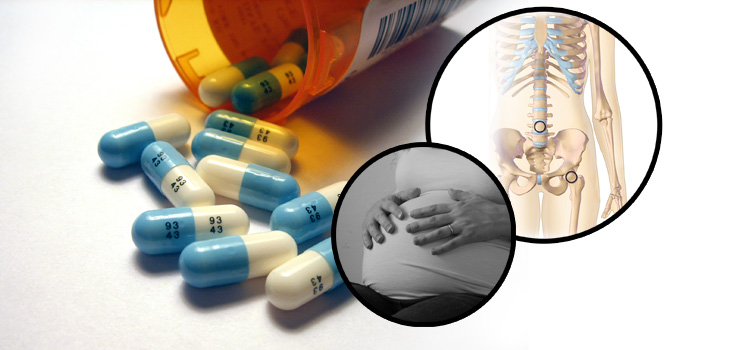
What is a sad mom-to-be to do? New work from the University of Wisconsin-Madison has found that using selective serotonin reuptake inhibitors (SSRIs) during pregnancy and breast-feeding causes decreased bone density in mothers that may put them at higher risk of broken bones later in life. However, the good news is that high-dose folic acid tended to reverse the effects of the SSRI on bone, the investigators found.
Antidepressants Causes Decreased Bone Density…For Life?
2 min read Premium comments
Secondary
“SSRIs are the most widely prescribed class of antidepressants, particularly during pregnancy and breast-feeding, ” said Laura Hernandez, Ph.D., the study’s principal investigator and an assistant professor at the University of Wisconsin-Madison, in the April 3, 2016 news release. “Therefore, it is of paramount importance that we explore the possibility that SSRIs may have detrimental effects on long-term maternal bone health.”
According to the news release, past studies show that SSRI use can cause decreased bone mineral density and increase the risk of fractures in both adolescents and adults. In addition, women who do not take SSRIs normally lose 6% to 10% of their bone mass while nursing. Although most women will recover lost bone within a year after they stop breast-feeding, recent research shows that women who breast-feed for longer periods have an increased risk of low bone density after menopause.
The researchers gave fluoxetine (Prozac) to six mice during pregnancy and lactation in addition to their regular diet and compared them with six similar female mice that received saline. The researchers fed two other groups of six mice each a diet supplemented with a high dose of folic acid before breeding and then gave them fluoxetine or saline during pregnancy and lactation.
Hernandez said both groups that received fluoxetine had increased serotonin reuptake—evidence of the drug’s action—by the mammary gland, which appeared to stimulate processes contributing to bone resorption. The fluoxetine recipients reportedly had lower expression of the bone-building protein osteocalcin at the femur, compared with the saline groups. Also, the fluoxetine groups demonstrated increased expression in the femur of macrophage colony-stimulating factor, which is responsible for bone breakdown.
Dr. Hernandez told OTW, “We study how non-neuronal/peripheral serotonin regulates calcium metabolism in lactating females (both cows and mice). We have previously shown that serotonin is critical to inducing the hormonal response in the mammary gland during lactation (production of parathyroid hormone related protein) that results in calcium mobilization from bone. As a result of this, we thought that there was a good possibility that use of SSRIs (which increase serotonin activity) during pregnancy and lactation could potentially overstimulate this natural event that occurs during lactation. There are also numerous reports in various human cohorts that SSRI use independently of pregnancy and lactation can results in increased bone fracture risk and decreased bone mineral density. Therefore, this led us to test this hypothesis.”
“It was surprising to see that bone volume/trabecular volume was decreased in dams three months after weaning compared to the control group.”
“I think women on SSRIs who are pregnant and lactating should be more carefully monitored for bone health. I also think we need to continue our animal research so that we are able to fully explain the mechanism of action and hopefully reveal a way to combat the bone loss while taking SSRIs, which are really critical for mental health.”
Author
React:
Discussion
This is a fascinating development. In my practice we've seen similar outcomes with the revised protocol. The key differentiator seems to be patient selection criteria. Has anyone else noticed the correlation with BMI thresholds?
Great point. I'd push back slightly on the conclusion, the sample size in the cited study is too small to draw population-level inferences. That said, the directional signal is compelling and worth a larger RCT.
We implemented a similar approach last year. Early results are promising but we're still gathering 12-month follow-up data. Happy to share our protocol if anyone is interested.
Join the conversation
Orthopedic professionals are discussing this. Sign in and upgrade to read every comment and add your voice.