
There are ankle sprains and then there are worse ankle sprains…and the latter is going to mean a longer time for return to play. James D. Calder, M.D. is an orthopedic surgeon with the Fortius Clinic in London, England. He and his colleagues looked at 64 athletes with grade II ankle syndesmosis sprains in an effort to learn how to differentiate stable from dynamically unstable ankle sprains and to determine who would take the longest to return to play. Dr. Calder told OTW, “In my practice I noticed that many of these syndesmosis injuries were resulting in an unpredictable time away from and often very lengthy return to sport. Athletes would frequently continue to experience symptoms of pain for several months and late reconstruction for underdiagnosed and undertreated injuries was difficult and did not guarantee a good result. With the more widespread use of MRI and earlier recognition of these injuries, there is an opportunity to accurately assess and optimally manage these high ankle sprains if we can have some pointers as to which injuries are the most likely to be subtly unstable.”
Ankle Sprains Not All Created Equal
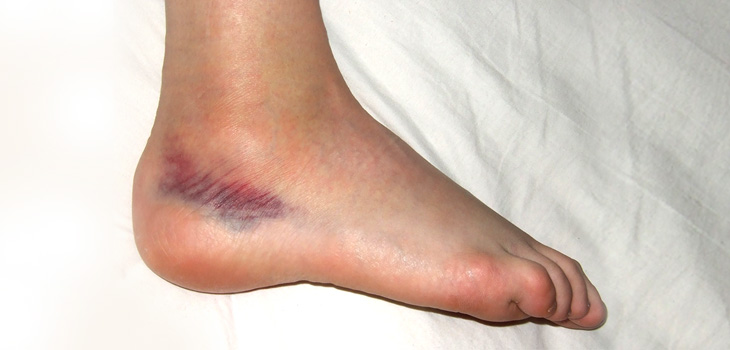
“Patients with stable injuries were treated with a boot and rehabilitation (grade IIa), while those considered to be clinically unstable (IIb) underwent arthroscopy. If in fact the sprains were unstable, then the syndesmosis was stabilized.”
The study, published recently in Arthroscopy, found that the 28 patients with grade IIa injuries returned at a mean of 45 days; those with grade IIb injuries returned to sports at a mean of 64 days. Dr. Calder told OTW, “We hope that this firstly highlights the fact that not all grade II injuries are the same and secondly that specific clinical and MRI findings may pick out those injuries that are more likely to be unstable when put through the physiological forces encountered in professional athletes retuning to sport. Thirdly, this study may act as a guide for the athlete and the team as to how long the athlete is likely to be away from sport if managed optimally.”
Discussion
This is a fascinating development. In my practice we've seen similar outcomes with the revised protocol. The key differentiator seems to be patient selection criteria. Has anyone else noticed the correlation with BMI thresholds?
Great point. I'd push back slightly on the conclusion, the sample size in the cited study is too small to draw population-level inferences. That said, the directional signal is compelling and worth a larger RCT.
We implemented a similar approach last year. Early results are promising but we're still gathering 12-month follow-up data. Happy to share our protocol if anyone is interested.
Join the conversation
Orthopedic professionals are discussing this. Sign in and upgrade to read every comment and add your voice.