
United Orthopedic Corporation (UOC) has commenced with patient enrollment in a follow-up study in the U.S. of the commercially available U-Motion II+ Acetabular System and UTF Reduced Stem in patients receiving primary total hip arthroplasty (THA). The study, anticipated to last approximately seven years, is a prospective, single arm, multi-center, post-approval study that will evaluate the short and long-term clinical performance of the devices.
United Orthopedic Corporation Launches Enrollment for Hip System
2 min read Premium comments
Secondary
“Despite numerous advances in hip replacement technology, issues such as postoperative dislocation, bearing wear and insufficient range of motion remain challenging problems, especially for younger, more active individuals, ” said Kurtis Biggs, DO, founder of the Joint Replacement Institute in Naples, Florida, in the February 23, 2016.
“The U-Motion II+ Acetabular System and UTF Reduced Stem are designed to address these issues by using enhanced implant materials, which allow for improved hip flexion and less risk of joint dislocation. We plan to investigate the clinical performance of the devices to further establish its benefit for patients seeking relief of hip pain or improved hip function.”
As indicated in the news release, “Dr. Biggs implanted the first U-Motion II+ Acetabular System and UTF Reduced Stem on a patient enrolled in the study on January 20, 2016 using the direct anterior approach, a minimally invasive, tissue-sparing technique that allows for quicker recovery and improved outcomes for patients. UOC plans to enroll up to 200 patients at a maximum of five sites in the U.S.”
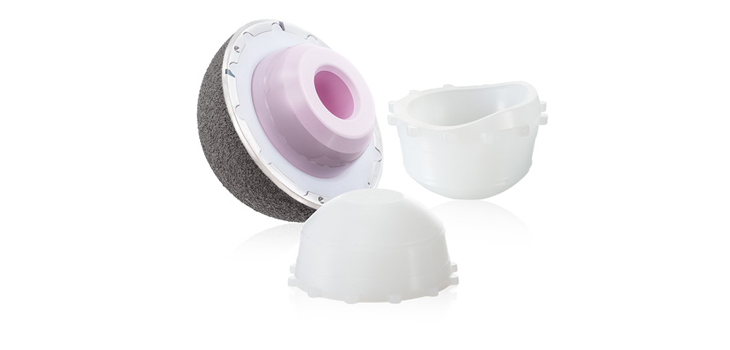
“The U-Motion II+ Acetabular System utilizes a unique coating technology intended to achieve a greater surface roughness of the implant. This allows for better initial stability and has been shown to reduce micromotion, both of which contribute to the long term fixation of the implant. The UTF Reduced Stem, forged from titanium alloy, is a wedge-shaped stem that facilitates optimal placement and fit in femora of varying disphyseal and metaphyseal widths. It comes in 14 sizes, with standard and high offset options, and key sizes (ranging from 3 to 8) with 1mm increments. The stem features optimized neck geometry, which contributes to increased range of motion and decreased cup-neck impingement.”
Mindy Carlson, Director of Clinical Affairs told OTW, “United Orthopedic Corporation (UOC) plans to enroll up to 200 patients at a maximum of five U.S. sites. This clinical trial design is based on standard of care measures and is a prospective, single arm, multi-center post-approval study, which most medical device companies have used to determine follow-up study outcomes.”
“The study is designed to evaluate the short and long-term clinical performance of the U-Motion II+ Acetabular System. This system uses enhanced implant materials including a BIOLOX delta ceramic head and a highly cross-linked polyethylene (XPE) liner and is designed to improve hip flexion while reducing the risk of joint dislocation. UOC is committed to providing advanced solutions for joint treatment as the U.S. population ages and the demand increases for improved technologies and procedures.”
React:
Discussion
This is a fascinating development. In my practice we've seen similar outcomes with the revised protocol. The key differentiator seems to be patient selection criteria. Has anyone else noticed the correlation with BMI thresholds?
Great point. I'd push back slightly on the conclusion, the sample size in the cited study is too small to draw population-level inferences. That said, the directional signal is compelling and worth a larger RCT.
We implemented a similar approach last year. Early results are promising but we're still gathering 12-month follow-up data. Happy to share our protocol if anyone is interested.
Join the conversation
Orthopedic professionals are discussing this. Sign in and upgrade to read every comment and add your voice.