
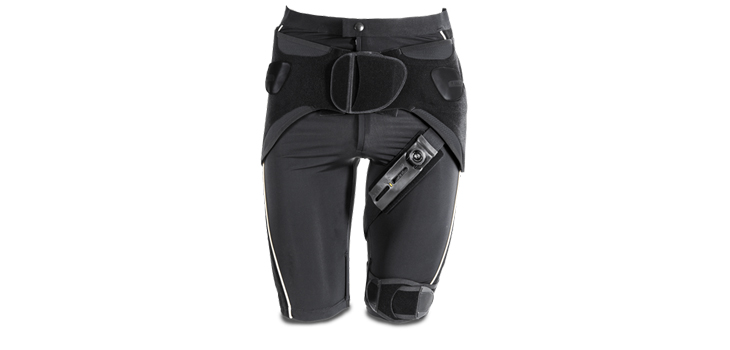
Össur, manufacturers of prosthetic and orthopedic products, has launched the Unloader Hip, a brace meant for patients with mild-to-moderate hip osteoarthritis (OA).
Össur Launches Unloader Hip
1 min read Premium comments
Secondary
As indicated in the February 27, 2016 news release, “Unloader Hip’s proprietary design is intended to improve patients’ mobility by using compression to encourage external rotation and abduction of the femoral head whenever the patient is walking. This helps reduce the load on the affected joint by dispersing the load to an area of less worn cartilage during heel strike. The sleek, lightweight design includes Össur’s patented SmartDosing system, allowing patients to adjust the fit to best suit their comfort and activity level.”
“In field studies, patients who wore the Unloader Hip brace showed significant improvements in the daily living activities over a four-week period. According to peer-reviewed clinical literature, increased patient activities have been associated with less hip limitations at later disease stages.”
“Although hip osteoarthritis cannot be cured outright, clinicians recommend a multi-modal approach including education and pharmaceuticals as the condition progresses. We designed Unloader Hip with these clinical practices in mind, and believe it serves as an excellent complement to support hip OA patients throughout the process, ” said Jason Thorne, Össur’s vice president of Global Marketing OA&I Solutions, in the February 27, 2016 news release.
Thorne told OTW, “Through our experience as OA bracing innovators, we have been amazed by the limited options for patients with debilitating hip osteoarthritis pain despite its high prevalence. The development process becomes a reality when we hear positive outcomes from patients improving their mobility wearing the brace. We are excited to launch the Unloader Hip as the first brace on the market designed to optimize hip OA treatment in order to improve mobility and decrease pain.”
“The Unloader Hip should be utilized as part of a multi-modal approach for hip OA patients that includes patient education, exercise and weight loss. With the Unloader Hip as part of this approach, our goal is to get patients to improve their mobility and back to the activities they enjoy.”
Author
React:
Discussion
This is a fascinating development. In my practice we've seen similar outcomes with the revised protocol. The key differentiator seems to be patient selection criteria. Has anyone else noticed the correlation with BMI thresholds?
Great point. I'd push back slightly on the conclusion, the sample size in the cited study is too small to draw population-level inferences. That said, the directional signal is compelling and worth a larger RCT.
We implemented a similar approach last year. Early results are promising but we're still gathering 12-month follow-up data. Happy to share our protocol if anyone is interested.
Join the conversation
Orthopedic professionals are discussing this. Sign in and upgrade to read every comment and add your voice.