
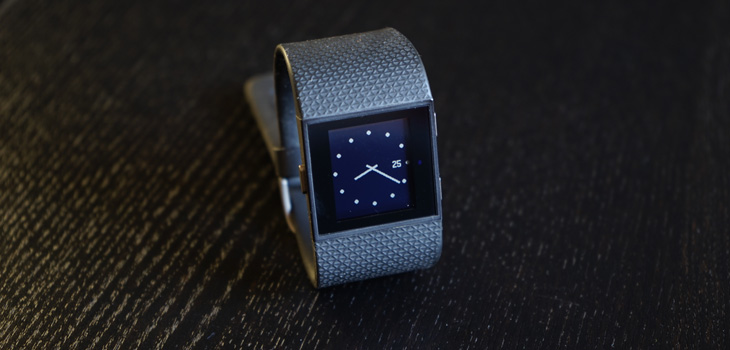
A study recently presented at the 2016 Annual Meeting of the American Academy of Orthopaedic Surgeons (AAOS) has undertaken the task of reviewing applications of fitness trackers as they might be used for orthopedic care.
NYU Langone Evaluates Fitness Trackers
2 min read Premium comments
Secondary
“…fitness devices have the potential to transform orthopaedic care, ” said lead study author Claudette Lajam, M.D., an assistant professor of orthopaedic surgery at NYU Langone Medical Center, in the March 4, 2016 news release. “If we can get people more involved in their care and help them get in better shape, then everyone wins—patients, physicians, and the entire health care system.”
According to the news release, “The study analyzed activity tracking, cost, interfaces, location of devices on the body, and other relevant features for 28 health devices named the most popular by top consumer tech magazines. The most common features were a pedometer (tracking distance traveled), in addition to monitors for heart rate, sleep and caloric intake, although many other features were available.”
“Dr. Lajam said data generated by fitness devices can be applied across different levels of orthopaedic care: Non-surgical patients can track behavior, activity levels and medication use and alter these factors to lose weight and maintain the best possible function in their extremities; pre-operative patients can reduce risk for post-operative complications by reducing their weight, preventing diabetes through glucose monitoring, and identifying sleep disorders; post-operative patients can evaluate rehabilitation progress and surgical outcomes by measuring walking distances and stairs climbed, and alter physical therapy for better recovery.”
“If authorized by patients, this data also can be sent to their doctor and health care team, via apps that interface with Apple HealthKit, Google Fit, and Microsoft HealthVault and electronic medical record systems.”
Dr. Lajam told OTW, “One of the challenges was that there are so many devices on the market, and that this platform is a rapidly changing one. New devices and new applications are developed daily. It surprised us to learn how few studies have been done with regard to applications in orthopedics. There are barriers, mostly with regard to privacy rules for patient information.”
“These are out of the box, consumer products with built in sharing capacity. Collaboration and adaptation of these technologies could help surgeons and institutions manage patients better.”
Asked what she would like to see included in a new technology, Dr. Lajam commented to OTW, “It would be great to have apps that could be tailored to track post-operative metrics; specifically, pain, wound status, medication use, etc.”
As for questions Dr. Lajam received at the AAOS meeting, “We are getting some interest and lots of questions about privacy concerns and integration with the medical record.”
React:
Discussion
This is a fascinating development. In my practice we've seen similar outcomes with the revised protocol. The key differentiator seems to be patient selection criteria. Has anyone else noticed the correlation with BMI thresholds?
Great point. I'd push back slightly on the conclusion, the sample size in the cited study is too small to draw population-level inferences. That said, the directional signal is compelling and worth a larger RCT.
We implemented a similar approach last year. Early results are promising but we're still gathering 12-month follow-up data. Happy to share our protocol if anyone is interested.
Join the conversation
Orthopedic professionals are discussing this. Sign in and upgrade to read every comment and add your voice.