
New research from Midwest Orthopaedics at Rush has found that fatigue can affect pitching mechanics and potentially result in injuries.
Kids’ Pitching Injuries: Fatigue Part of the Problem
2 min read Premium comments
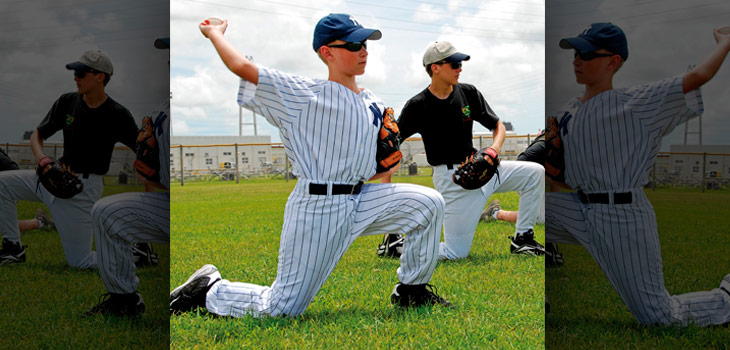
Secondary
“Our study simulated a 90-pitch game for 28 elite, adolescent pitchers and we investigated how their shoulder and elbow motions affected pitching speed, accuracy, pain, and pitching mechanics. As expected, the boys became progressively more fatigued and painful with additional pitches. We also found that their pitching mechanics changed, which may ultimately contribute to injury, ” said Charles Bush-Joseph, M.D., medical director of Midwest Orthopaedics at Rush, in the March 5, 2016 news release.
As indicated in the news release, “Study participants ranged in age between 13-16 years of age, had been pitching for approximately 6 years and pitched an average of 94 pitches per week. Shoulder range of motion was assessed before and after the game. Speed and accuracy were measured for every pitch and every 15th pitch was videotaped. Perceived fatigue and pain were assessed after each inning.”
“Through our analysis of pitching mechanics, it was noted that core and leg strength may be a key component of fatigue and ultimately injury in pitchers. As pitchers became fatigued, trunk rotation timing began to falter and pain increased. We hope that with additional research, we can work towards programs to help build strength and prevent these shoulder and elbow pitching injuries, ” Dr. Bush-Joseph added.
Asked how the players pitching mechanics changed, Nikhil Verma, M.D., sports medicine physician, Midwest Orthopaedics at Rush, told OTW, “As adolescent pitchers became more fatigued, they lost the proper timing of sequential rotation of the hips and then the shoulders. The core musculature thus lost the ability to contribute to pitch velocity. We hypothesize that this change occurs because the core and leg musculature fatigues before the upper extremity and thus core kinematics change before upper extremity kinematics as adolescent pitchers fatigue. We thus hypothesize that core and leg strengthening may be key adjuvants to prevent fatigue and potentially prevent injury in youth pitchers.”
“The most surprising finding was that trunk/core kinematics change before upper extremity kinematics as pitchers become fatigued. This supports the concept of the “kinetic chain” meaning that the large lower extremity and core muscles are the true power generators for the baseball pitch. Many young players fail to appreciate the importance of trunk, core and lower extremity strength. Early fatigue in these areas may lead to increased stress in the arm and shoulder and potentially increased risk of injury.”
Author
React:
Discussion
This is a fascinating development. In my practice we've seen similar outcomes with the revised protocol. The key differentiator seems to be patient selection criteria. Has anyone else noticed the correlation with BMI thresholds?
Great point. I'd push back slightly on the conclusion, the sample size in the cited study is too small to draw population-level inferences. That said, the directional signal is compelling and worth a larger RCT.
We implemented a similar approach last year. Early results are promising but we're still gathering 12-month follow-up data. Happy to share our protocol if anyone is interested.
Join the conversation
Orthopedic professionals are discussing this. Sign in and upgrade to read every comment and add your voice.